Last updated November 21, 2026
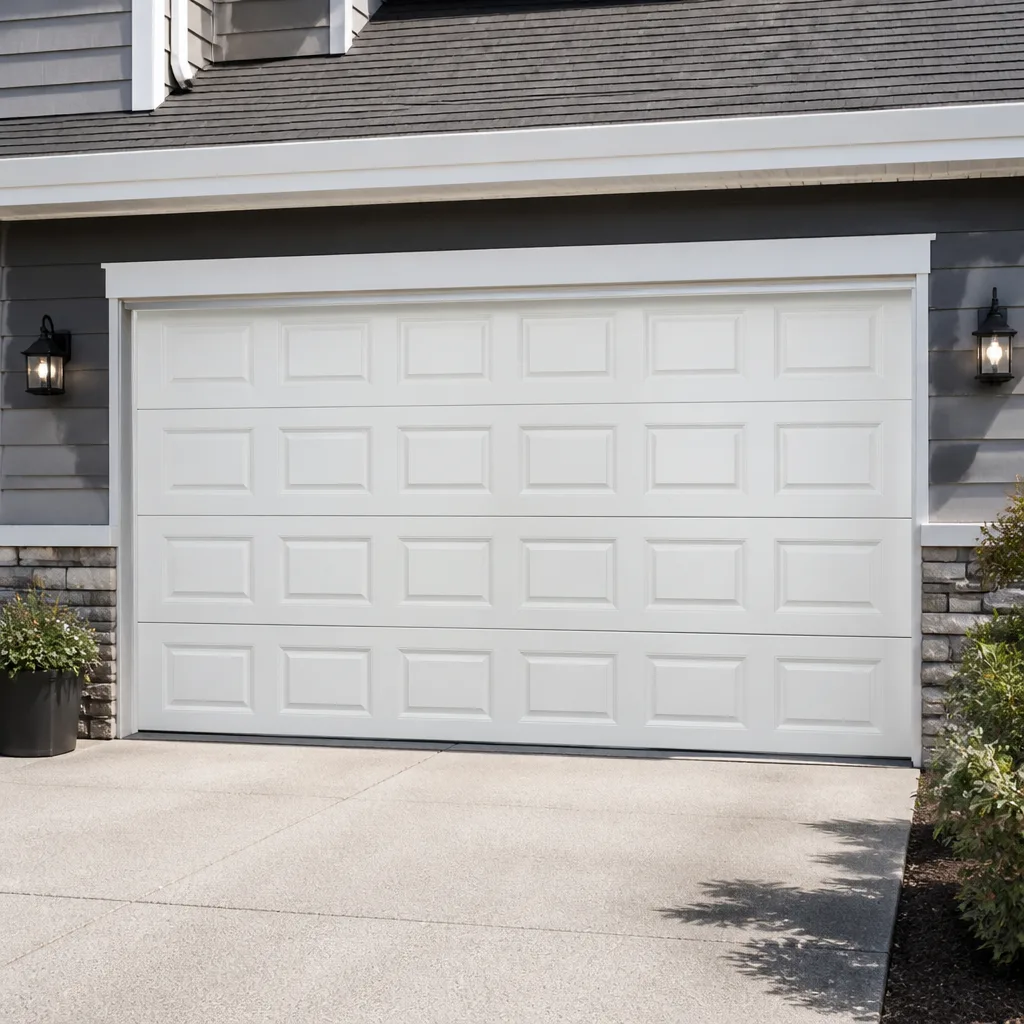 Raised-panel steel
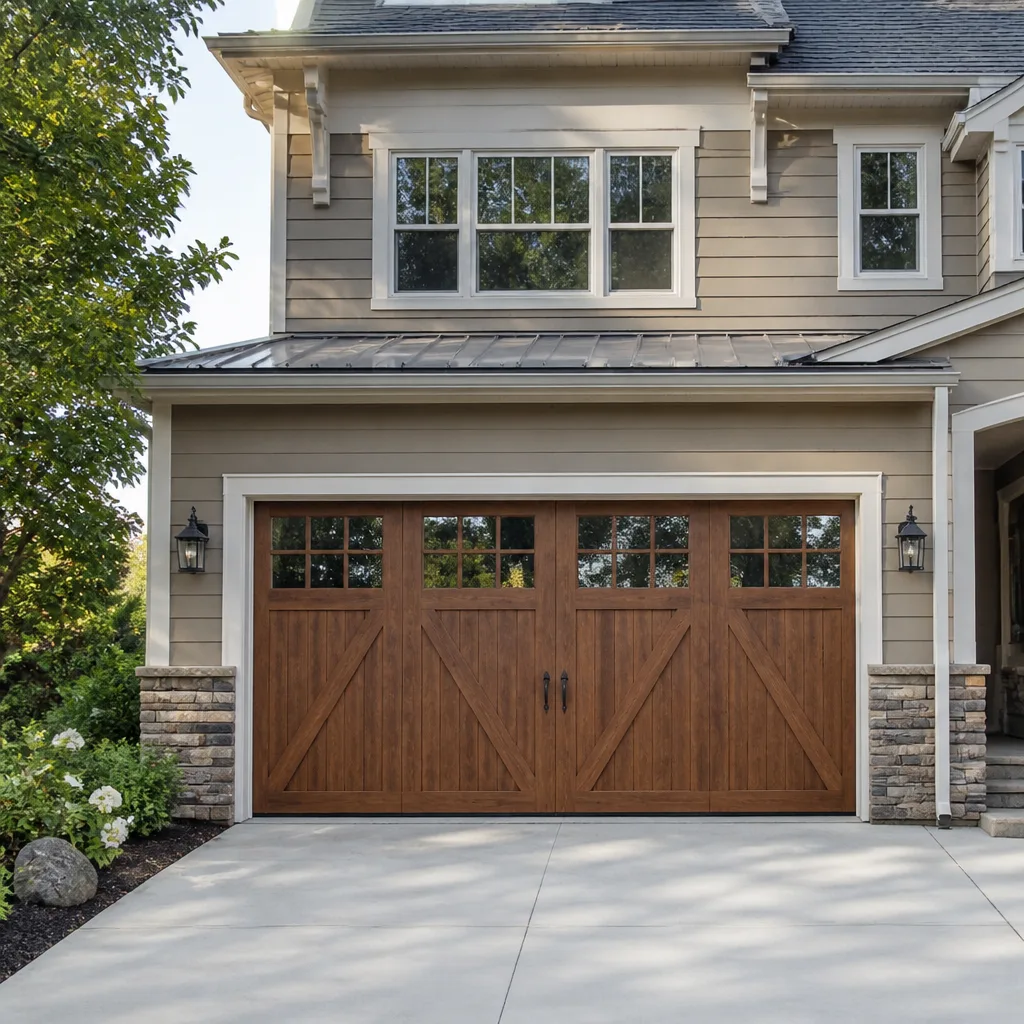 Carriage house
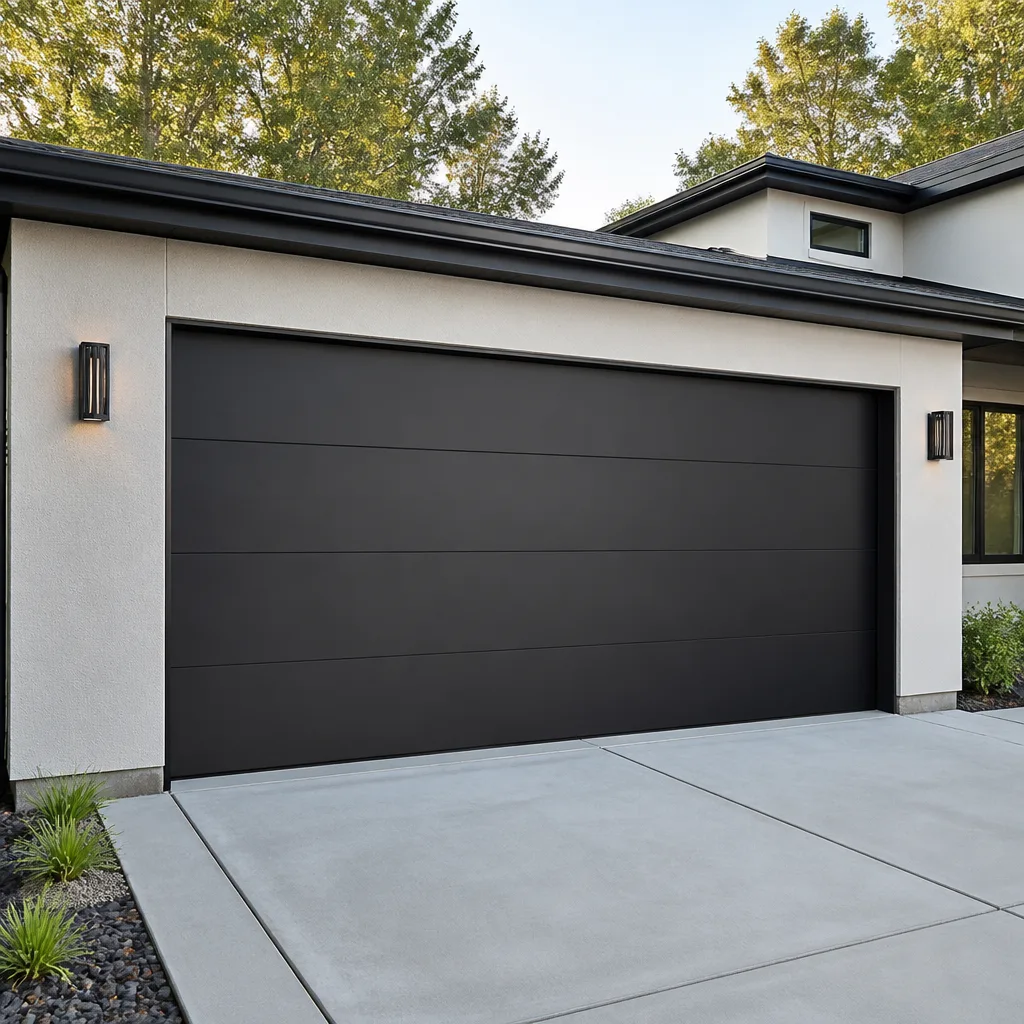 Modern flush
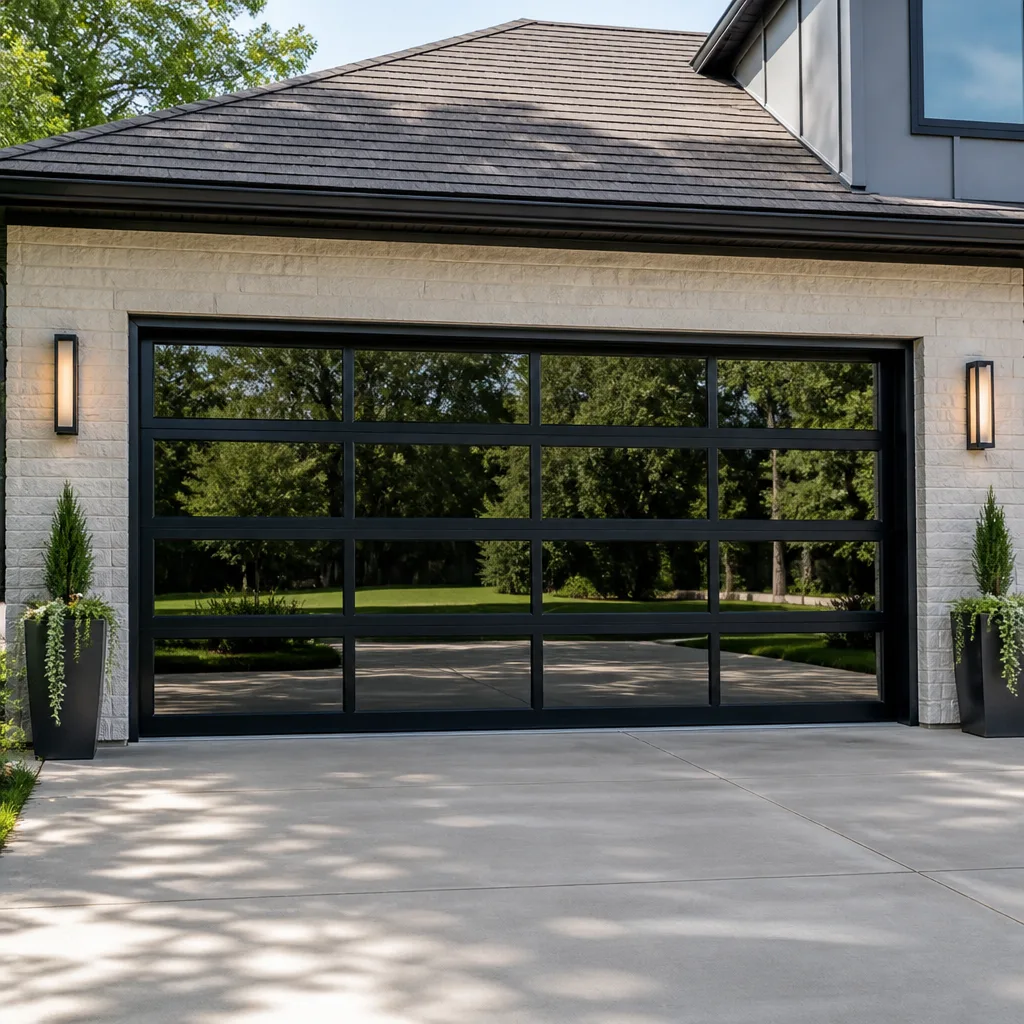 Full-view glass
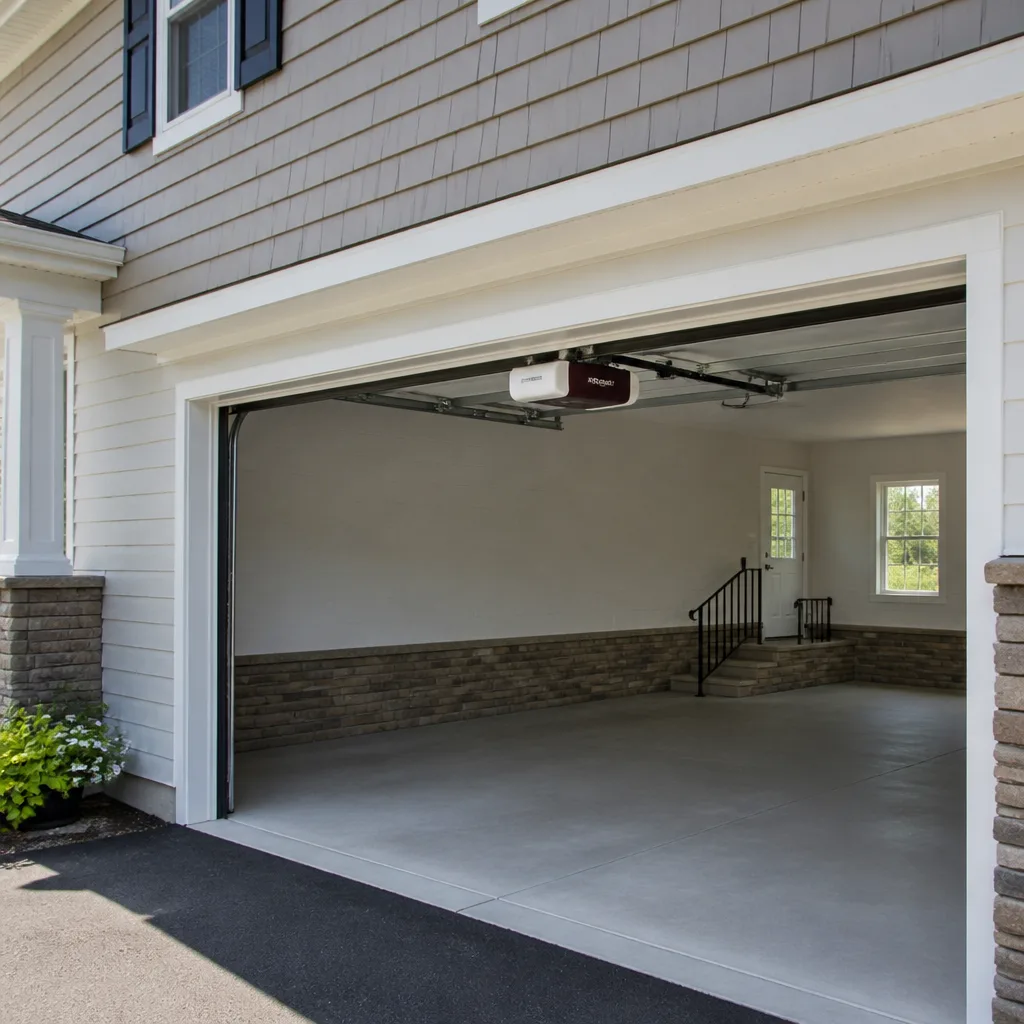 LiftMaster openers
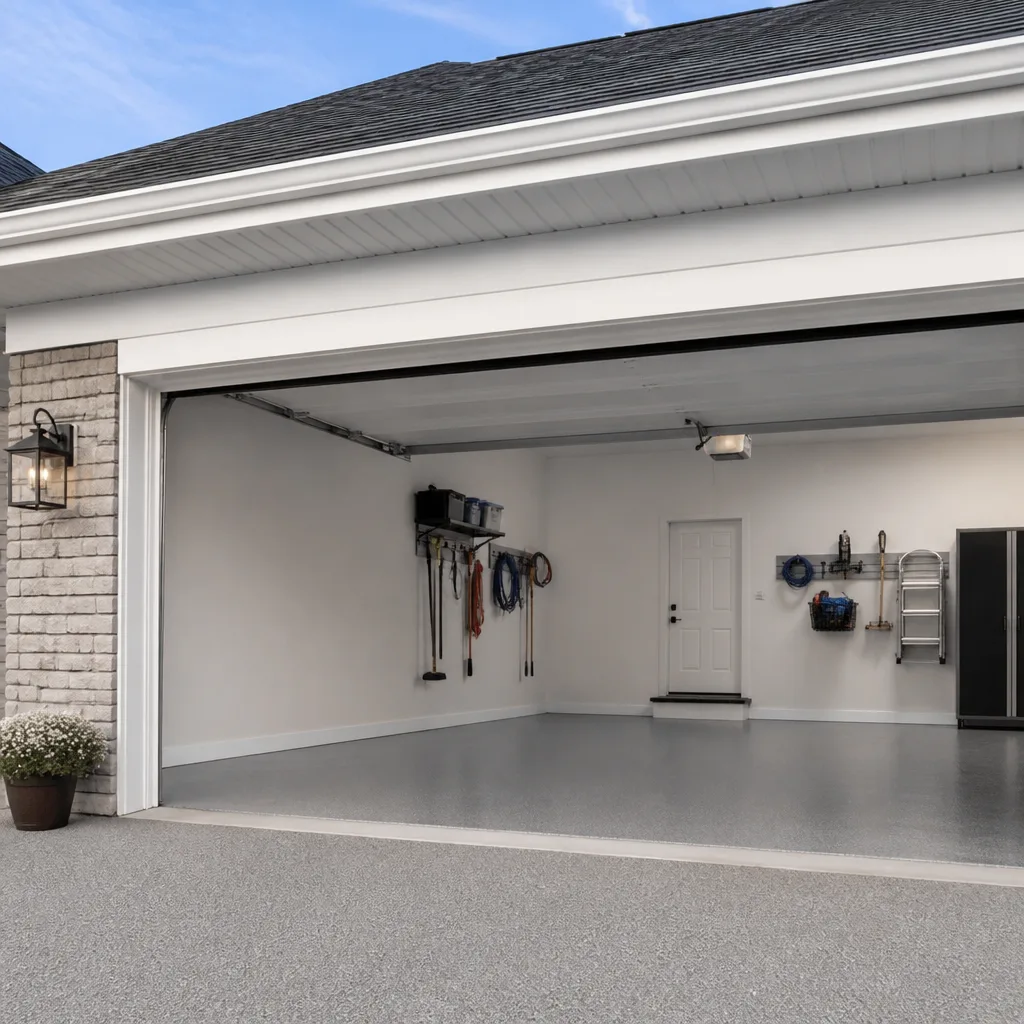 Chamberlain openers
Full 25-point door and opener safety check with every visit - springs, cables, rollers, tracks, and your LiftMaster or Chamberlain opener included
You get a price before we start. It does not change when the pro arrives.
Get your free estimateThe Complete Guide to Garage Doors in Columbia
Columbia was master-planned starting in 1967, which means a large share of the homes here are still running garage door hardware that predates the modern torsion spring standard. That isn’t a fun piece of local trivia – it’s the single biggest reason a garage door repair in Columbia can go sideways. Contractors quote a job over the phone, arrive, and find extension springs, odd panel sizes, or an opener that hasn’t been made in years. This guide covers the real garage door landscape in Columbia: what the village associations require, where the humidity actually does damage, how to choose between repair and replacement, and what to expect on price. If you’re a homeowner trying to make one good decision, everything you need is here.
Quick Answer
Garage door repair in Columbia, MD costs roughly $150 to $400 for most common problems, while replacing a failed door runs $900 to $2,500 depending on materials and whether the rough opening needs modification. The most critical local factor is that homes built between 1968 and 1995 often have non-standard opening dimensions, so a like-for-like replacement isn’t automatic. And before you buy any new door, check your village association’s covenants – Columbia’s HOAs control color, material, and window configuration, and an unapproved door becomes an expensive problem.
Styles & brands we work with
- Raised-panel steel
- Carriage house
- Modern flush
- Full-view glass
- LiftMaster openers
- Chamberlain openers
Table of Contents
- How Columbia’s Village Associations Govern Your Garage Door
- Why Columbia’s Older Homes Have Non-Standard Openings
- The Humidity Corridor: Where Doors Fail Here
- Spring Systems: What’s Behind Your Door
- Repair or Replace? A Decision Framework
- Brands You’ll Find in Howard County Homes
- What Garage Door Work Costs in Columbia
- When a Door Failure Becomes an Emergency
How Columbia’s Village Associations Govern Your Garage Door
Columbia is not a single municipal entity with one set of rules – it’s ten villages, each with its own association and architectural controls. Kings Contrivance, Wilde Lake, Oakland Mills, Long Reach, and the rest each review exterior changes, and garage doors fall squarely inside that review. This is the piece that national buying guides completely miss. A homeowner can pick out the perfect steel carriage-house door and then discover the village won’t approve the window configuration.
The review process usually asks for the same categories of information:
- Material: painted steel dominates, but associations often restrict unpainted galvanized finishes, raw aluminum, and some wood products that need frequent refinishing.
- Color: most villages maintain an approved palette. Off-white, almond, brown, and specific grey tones show up repeatedly; bright colors and bold two-tone treatments are usually rejected.
- Window configuration: the number, shape, and placement of lites are often tied to the home’s original design language. Adding or removing windows is a common flashpoint.
- Visible hardware: decorative strap hinges, clavos, and other ornamental hardware may need to be disclosed and approved if they’ll be visible from the street.
Here’s the honest advice: get the architectural review handled before you sign a contract. A vendor who has done dozens of jobs in Columbia knows which villages are strict about windows and which let you swap an equivalent door in a similar color without much friction. If a contractor’s first response to “what does my HOA require?” is a shrug, that’s a signal. We ask about your village before we quote because it changes which doors we can actually put on your house.
When you’re ready to move, garage door repair decisions start with the same question, and it’s worth getting a written answer before you spend money on a replacement that can’t be installed.
Why Columbia’s Older Homes Have Non-Standard Openings
Standard garage door sizes today are 8 or 9 feet wide for single doors and 16 feet for double doors, with 7-foot headroom as the norm. Plenty of Columbia homes don’t match that. Homes built during the planned community’s earlier phases through the mid-1990s were constructed to specs that varied by builder, and the result is rough openings that run a few inches off standard in either direction.
What that means in practice:
- The measurement happens on site, not on the phone. Someone has to physically measure the opening – width, height, headroom above the door, and the side clearance – before a replacement can be quoted accurately.
- A “standard” door may not fit. If the opening is 8 feet 6 inches instead of 8 feet, a stock door leaves a gap or won’t seat against the jambs.
- Custom sizes are available but take longer and cost more. That’s just the economics of a made-to-order panel.
- The opening can sometimes be reframed to standard. This adds carpentry, but it can save money long term and widen your product options.
- Opener rail length and travel travel are affected too. An unusual height changes how the opener is mounted and how far the door travels.
If your door is on the older side, do a quick check with a tape measure – not to install anything yourself, just to know what you’re dealing with. Write down the width, height, and the distance from the top of the door to the ceiling. That single note will make every conversation you have with a contractor more useful. Legacy hardware is a related issue; older openers and springs from this era are exactly why garage door opener repair on Columbia homes frequently involves updating the whole track and mounting setup rather than a straight swap.
The Humidity Corridor: Where Doors Fail Here
Columbia sits between the Patuxent River watershed and the I-95 corridor, and that geography has a real effect on garage doors. The area sees humid summers and freeze-thaw cycles in winter, and the garage itself is often the least climate-controlled space in the house. Moisture sits there. It doesn’t all fail at once – it fails at specific, predictable points.
- Bottom seals: the rubber or vinyl astragal at the bottom of the door is the first to go. It cracks, dries out, and stops sealing. You’ll notice daylight under the door or a cold draft in winter before you notice the seal itself.
- Steel panel rust: paint chips at the edges and along the bottom rail. Once moisture gets under the paint, rust starts and spreads along the panel seam. Rust at the bottom edge of a steel door is a common Columbia sight.
- Torsion spring corrosion: springs are under high tension and hidden, but humidity attacks the coils. Corrosion weakens the steel and shortens spring life. A spring that’s gone through years of humid summers and freezing winters here doesn’t last as long as one in a drier climate.
- Track and roller friction: rust and grime on the tracks, combined with rollers that have dried out, create drag that puts extra strain on the opener and the springs.
The takeaway is straightforward: a garage door in Columbia needs a bit more inspection than the national average, especially at the bottom seal and the springs. The cheap prevention is simple – keep the door painted, replace a fraying bottom seal when you first see it, and don’t ignore a spring that looks rusty. The expensive version is waiting until the spring snaps or the panel rusts through.
Spring Systems: What’s Behind Your Door
Garage doors run on either torsion springs or extension springs, and knowing which you have changes everything about how the door is repaired and maintained. A torsion spring is a horizontal coil mounted on a shaft above the door. An extension spring sits alongside the horizontal tracks on either side. The systems are not interchangeable, and they fail differently.
Here’s the part that matters most: springs are dangerous, and we treat them that way. A torsion spring under load can release its stored energy catastrophically if it’s handled without the right tooling and tension-release procedure. Extension springs are equally capable of causing serious injury if a restraint system fails. This is not a DIY repair, no matter how many videos are online. We don’t walk homeowners through spring work, and we’d ask you not to attempt it.
What to know instead:
- Know the symptom. A snapped torsion spring usually makes a loud bang and the door won’t lift. A broken extension spring often leaves the door crooked, hanging at an angle.
- Don’t run the opener. If a spring has failed, the door is out of balance. The opener will strain against the full weight of the door and can damage itself or the door.
- Call for spring repair, not general handyman work. This is the highest-risk, most technical garage door job, and it’s why garage door spring repair is a specialist’s job, not a generalist’s.
- Ask about the pair. Springs are usually replaced in matched sets because they wear together. Replacing one to save money now means the other is likely to fail soon.
- Ask about cycle life. Springs are rated by cycles (one full open and close = one cycle). Higher-rated springs cost more but last longer – worth knowing when you’re comparing quotes.
Our technicians have up to 9 years of experience with spring systems, torsion and extension both. When we quote a spring job, the written price is for the work described, and the price is agreed before anyone starts turning bolts.
Repair or Replace? A Decision Framework
This is the question homeowners ask most, and the honest answer depends on four things: the age of the door, the condition of the panels, the insulation you actually need, and whether the repair cost is a meaningful fraction of replacement. Walking through it in order is the cleanest way to decide.
- Age of the door. A door past the end of its typical service life has components (springs, hinges, rollers, cables) approaching failure together. Replacing one part of a tired system often just moves the next failure forward by a few months.
- Panel condition. Rust-through, structural dents, or delamination on a wood door are usually replacement territory. A single dented panel with sound structure can often be swapped on its own.
- Insulation needs. If the garage shares a wall with living space, or you use the garage as a workshop, insulation matters. Older non-insulated doors bleed heat, and adding insulation mid-life isn’t practical – the door needs to be replaced.
- Cost ratio. A general rule of thumb: if the combined repair cost approaches a large share of the price of a new door, replacement is worth considering seriously. Multiple failed parts on an old door push you toward that line quickly.
The HOA angle folds in here too. If your village requires a specific look and your current door doesn’t match it (because a previous owner installed something out of spec), replacement fixes two problems at once. And when it comes to insulation, ask about the R-value of any door you’re considering – that number tells you more about performance than glossy marketing copy. The right fix is the one that addresses the actual problem; sometimes that’s a repair, and sometimes it’s a new door. We’ll tell you which one we think it is, plainly, and write the estimate to match.
Brands You’ll Find in Howard County Homes
Walk through any Columbia neighborhood and you’ll be looking at a fairly predictable set of garage door and opener brands. That predictability is useful. A technician who knows your brand knows the parts it uses, how it fails, and what’s likely going wrong before they arrive. That’s the difference between a diagnosis and a guess.
The systems we work on most often here:
- Clopay and Amarr: two of the most commonly installed garage door manufacturers in Howard County. Panel styles, spring mounting, and hardware patterns are familiar territory.
- Wayne Dalton: common on older homes, and worth knowing about because the product line has changed over the years – older models can have parts sourcing quirks.
- LiftMaster and Chamberlain: openers found in a huge share of local homes. LiftMaster openers in particular are everywhere, and the wireless and safety-sensor systems behave in predictable ways.
- Genie, Craftsman, and Raynor: all present in the local housing stock, each with their own opener logic and part numbers.
If you know your brand, say so when you call. If you don’t, that’s fine – the model number and a photo of the opener or a door label is enough for us to identify the system. Being fluent in the brand means we don’t spend the first hour of a service call learning your door. Call Columbia Garage Door Repair Pros and tell us what you’ve got.
What Garage Door Work Costs in Columbia
Garage door pricing in Columbia reflects the local market: older housing stock, non-standard openings, and HOA-driven product restrictions all add variables that flat-rate national pricing ignores. Below are typical ranges for the work we do. Treat these as estimates, not quotes. The written estimate sets the final price, and it’s agreed before any work begins.
| Service | Typical estimated range |
|---|---|
| Service call / diagnostic visit | $75 – $120 |
| Torsion spring replacement (one spring) | $180 – $320 |
| Extension spring replacement (one spring) | $130 – $240 |
| Matched pair of springs (replaced together) | Approximately double the one-spring price |
| Opener repair (sensor, gear, logic board, remote) | $120 – $300 |
| New opener installation | $300 – $650 |
| Cable, roller, and hinge replacement | $100 – $250 |
| Bottom seal replacement | $90 – $180 |
| Single-panel replacement | $150 – $400 |
| New single door installation (stock size) | $900 – $1,800 |
| New double door installation (stock size) | $1,500 – $2,500 |
| Custom-size door or reframing the opening | Quoted per job after on-site measurement |
A few things to keep in mind when comparing quotes. A matched pair of springs costs roughly double a single spring because both are replaced together – that’s not an upsell, it’s how the balance of the door is maintained. Custom sizes and any reframing needed to bring an odd opening back to standard are quoted after measurement, because they can’t be priced responsibly on the phone. And any quote you get should be specific: what’s being replaced, what brand of part, and what the total is. If the number moves after the technician arrives, ask why before you say yes.
When a Door Failure Becomes an Emergency
Most garage door problems can wait for a scheduled visit. Some can’t. A door that won’t close, a door that’s hanging off its track, or a snapped spring that’s left the door jammed open are not just inconveniences – they leave your home exposed and can get worse quickly. That’s when emergency garage door service matters.
Scenarios where we treat the job as time-sensitive:
- A door stuck open. The house isn’t secure until it closes. This is the most common reason we get called on short notice.
- A door hanging off the track. It’s a hazard and often means one side has dropped, which puts stress on everything connected to it.
- A snapped spring. The door may be too heavy to lift manually and unsafe to force. Stopping further damage early prevents a bigger repair.
- An opener that’s failed with the car trapped inside. A real access problem that needs solving, not waiting on.
- A door closing on something or someone. If the safety reverse has failed, stop using the door entirely and call.
In an emergency, resist the urge to force the door manually. On a spring-broken door, the full weight is unsupported, and pulling it by hand can cause the door to come down fast. Call us, describe what’s happening, and we’ll tell you whether it’s safe to leave it as-is. Emergency service is a core part of what we do, not an afterthought.
Common Mistakes to Avoid
- Ordering a door before checking HOA rules. Columbia’s village associations review material, color, and window configuration, and a rejected door is a costly return. Get approval first, then order.
- Assuming “standard size” means it fits. Homes built during the community’s earlier decades often have non-standard openings. Measure before you buy, not after.
- Replacing one spring when both are worn. A matched pair wears together. Replacing one leaves the other close to failure and puts the door out of balance.
- Ignoring a torn bottom seal. In this humidity, a failed seal lets moisture in at the exact spot where steel panels rust. Fix it while it’s a $90 problem.
- Forcing a door with a broken spring or a failed opener. The door is heavier than it looks without spring support, and forcing it can bring it down or damage the track and panels.
- Choosing a generalist to save on a spring repair. Spring work is the highest-risk job in this trade. A handyman who doesn’t do spring work regularly is not the right call.
- Comparing quotes on price alone. A quote that doesn’t specify parts, brand, and total scope isn’t really a quote. Ask what’s included, and expect a written number before work starts.
See the difference
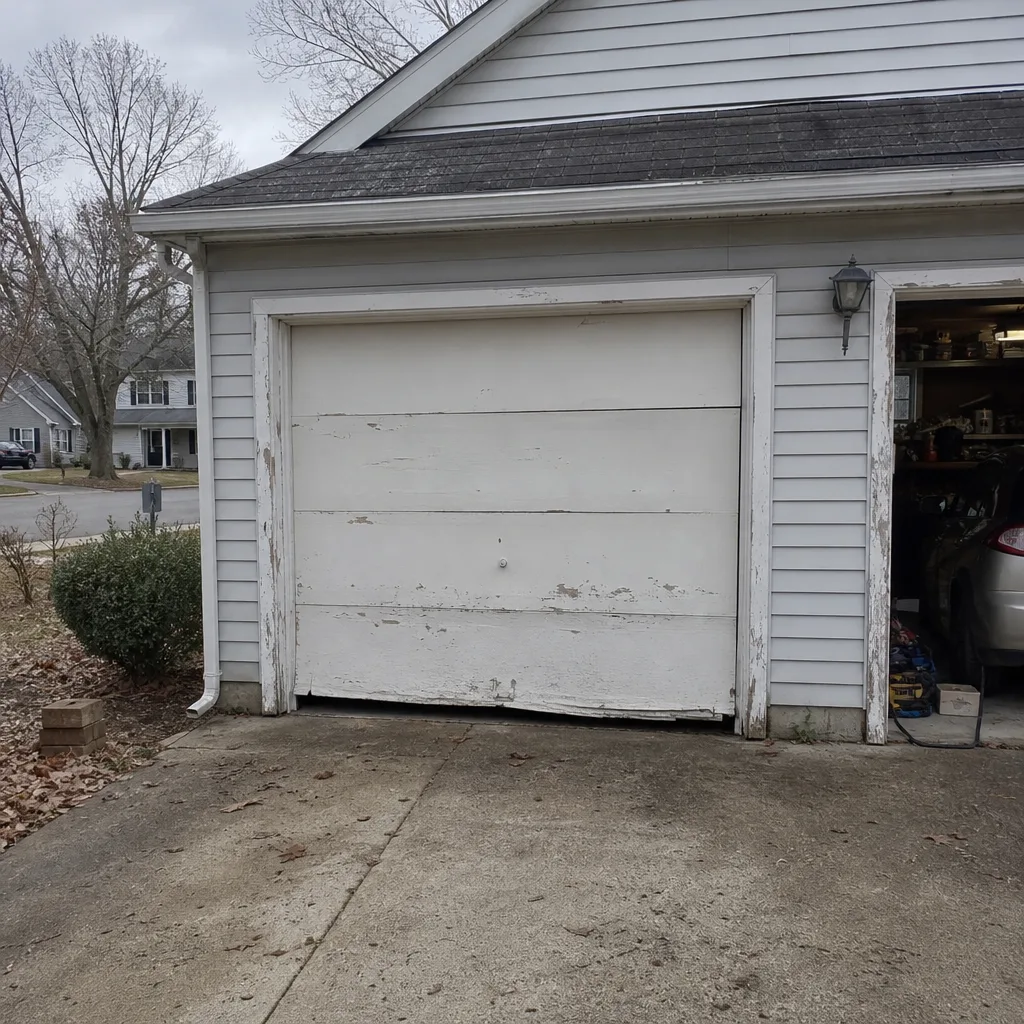 Before
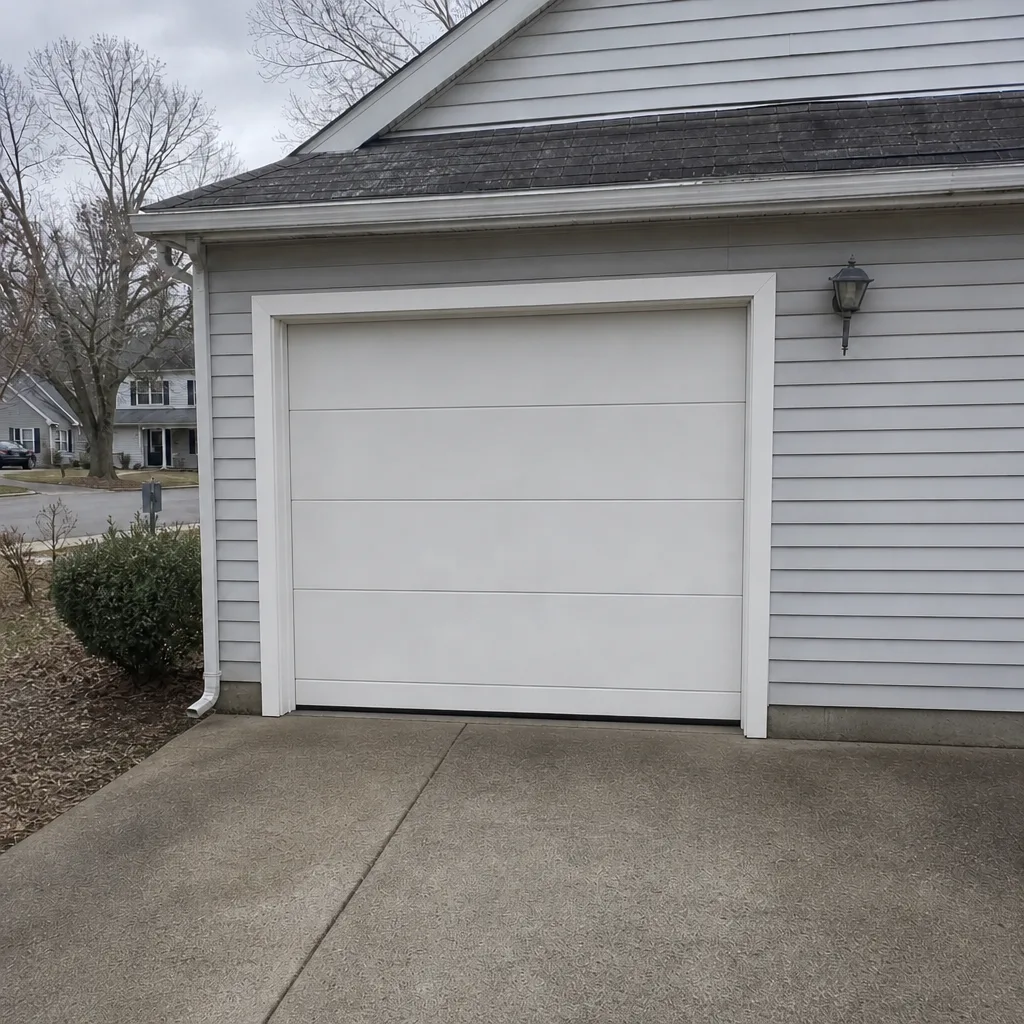 After
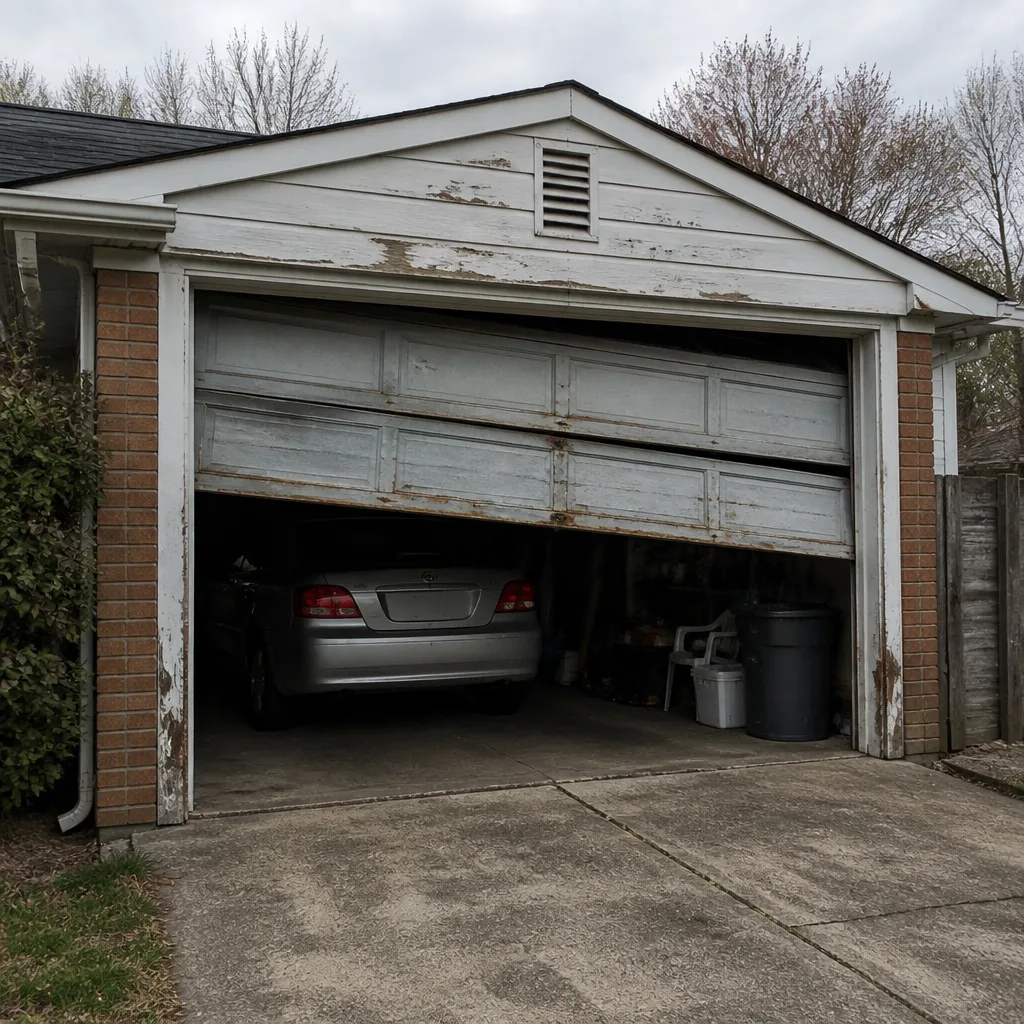 Before
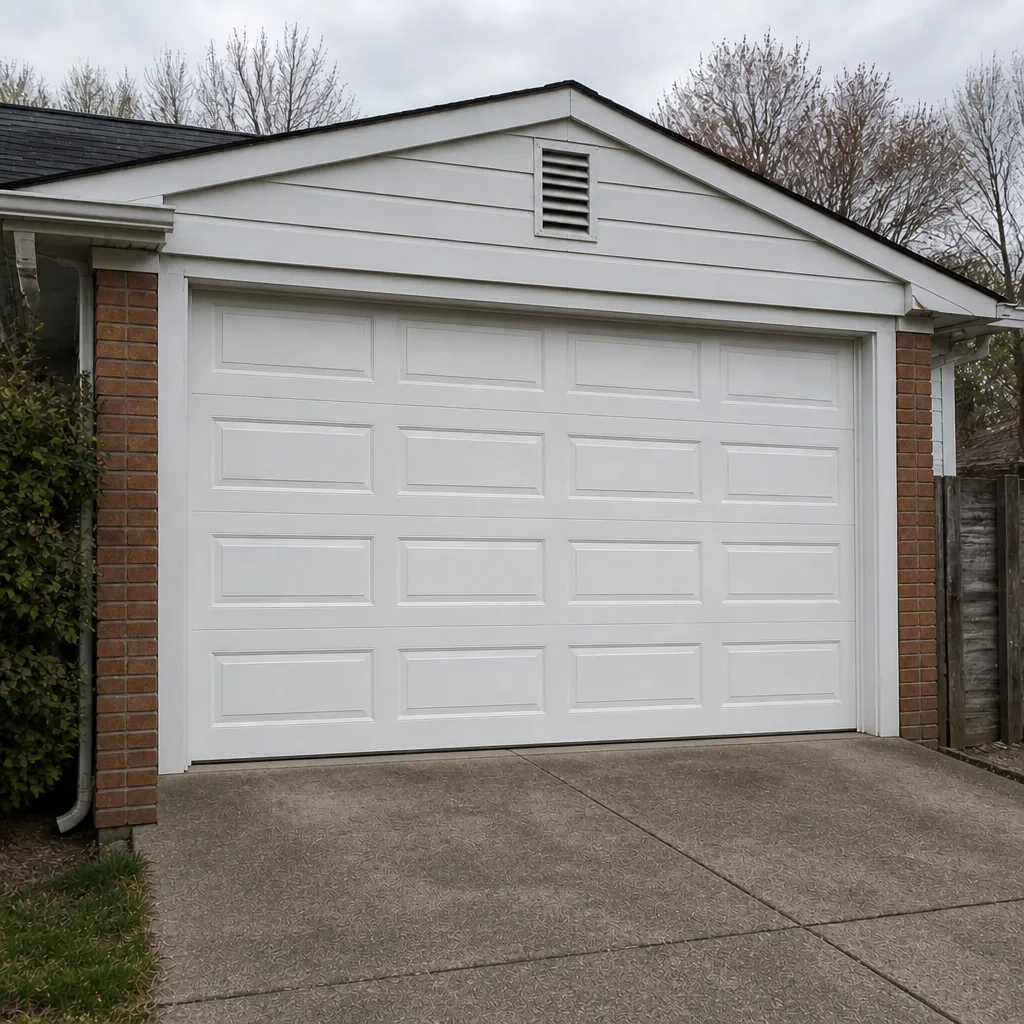 After
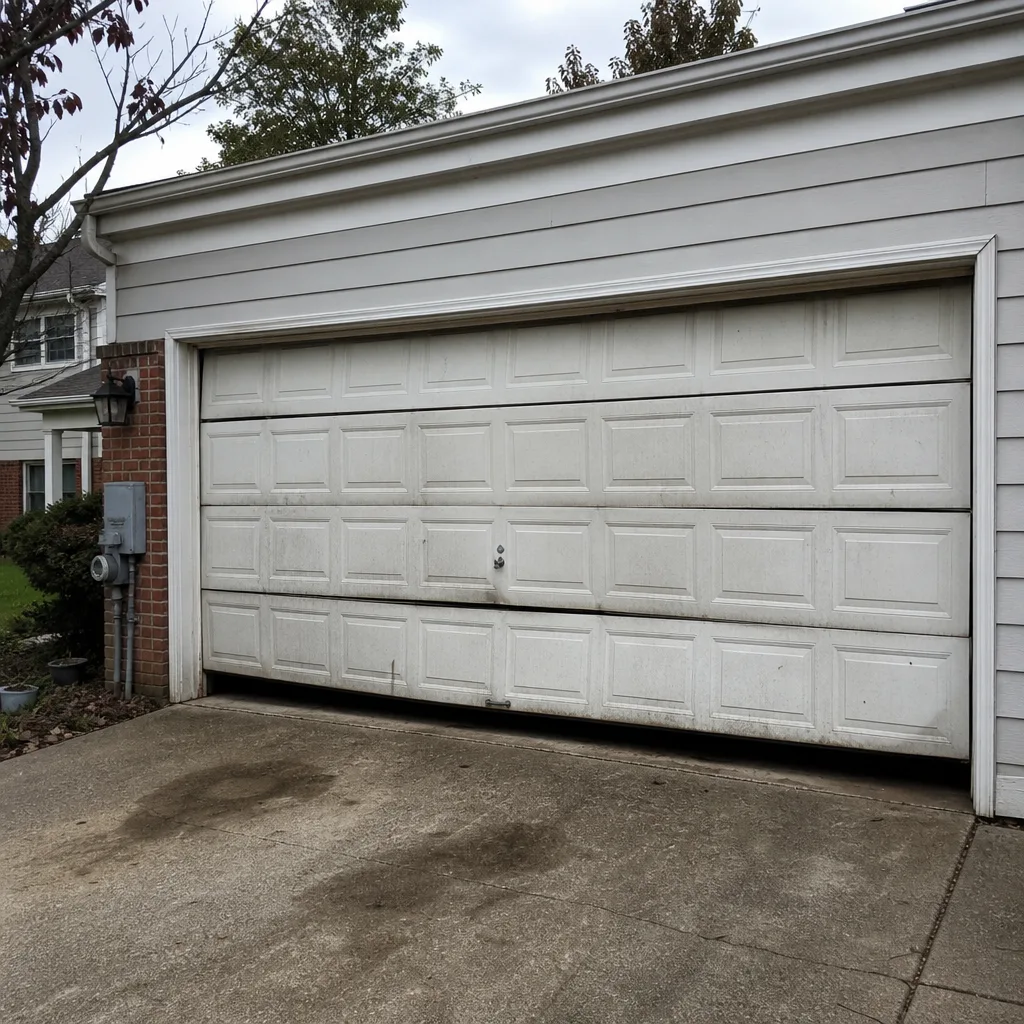 Before
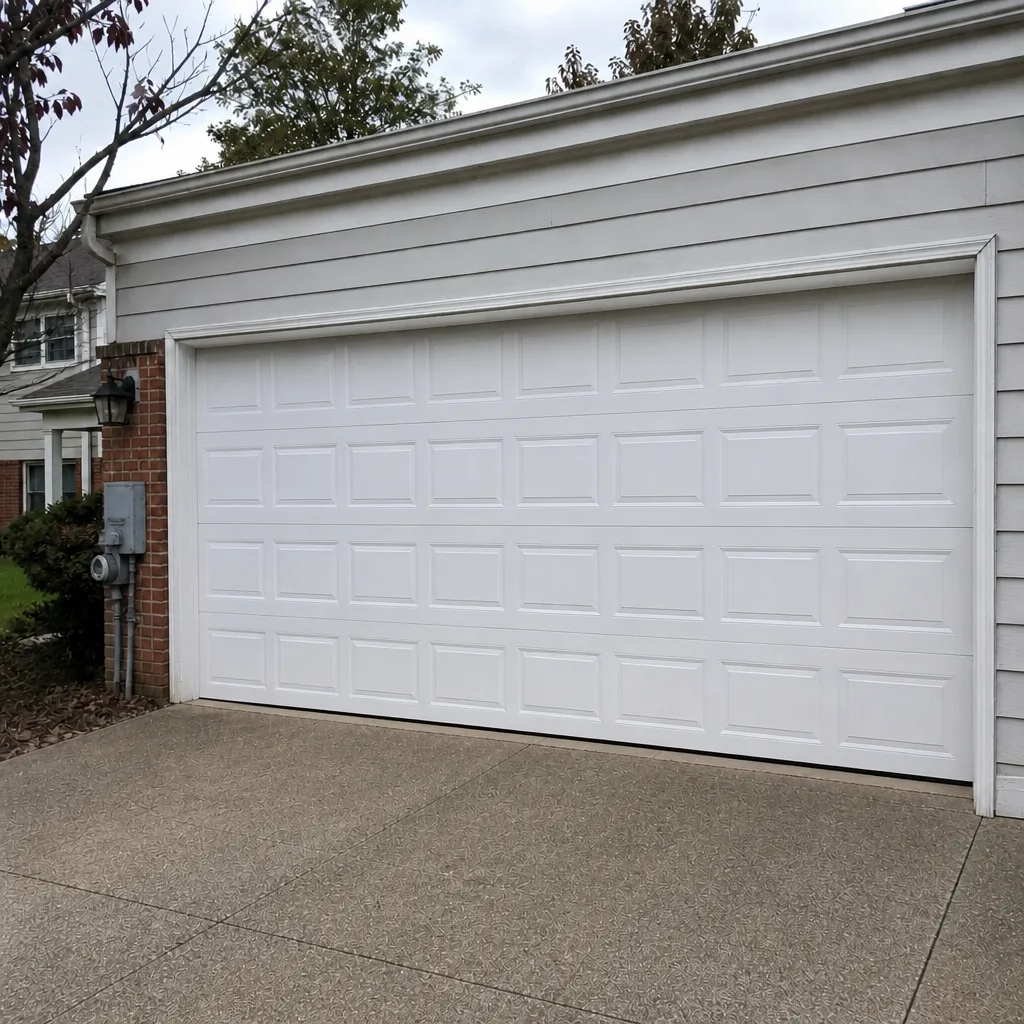 After
When to Call a Professional
Call a professional when the work involves springs, cables, or the structural adjustment of the door and track – these carry real injury risk and shouldn’t be attempted by a homeowner. Call when the opener has failed and the door won’t move, when a panel is visibly bent or separating, or when the door is off its track. Call when a door won’t close and your home isn’t secure. And call when you’re planning a replacement and need an accurate measurement and a quote that accounts for Columbia’s older, sometimes non-standard openings. We handle the full door system – panels, springs, openers, hardware, and safety mechanisms – and nothing else. Columbia Garage Door Repair Pros offers free estimates in Columbia – call (844) 913-3261.
Frequently Asked Questions
Most common garage door repairs in Columbia fall between $150 and $400, with spring replacements typically $180 to $320 for a single torsion spring and opener repairs in the $120 to $300 range. The written estimate sets the final price, agreed before work starts. Call (844) 913-3261 for an exact quote – estimates are free.
Yes, in most cases you do – Columbia’s village associations review exterior changes, including garage doors, and control material, color, and window configuration. Submit the architectural review before you order the door, not after. If you’re unsure which village applies to your address, ask, and we can help you sort out the practical part of the request.
Spring repair is often available same-day depending on part availability and scheduling, and our emergency service covers situations where a failed spring leaves your home unsecured. Call (844) 913-3261 and describe what’s happened – we’ll tell you what’s possible and when. Never attempt to lift or force a door with a broken spring.
Rust at the bottom edge is usually the combined effect of a worn bottom seal and Columbia’s humid summers – moisture gets past the seal and sits against the steel. Replacing the seal early is inexpensive; letting the rust spread into the panel is not. A bottom seal replacement is typically $90 to $180.
It depends on the age of the door, the condition of the panels, and how much the repair costs as a share of replacement. If the door is in the final stage of its service life and multiple parts are failing, replacement is often the better value. If one part has failed on an otherwise sound door, repair is the right fix. A free estimate will give you both numbers.
We work on the brands most common in Howard County homes, including Clopay, Amarr, Wayne Dalton, LiftMaster, Chamberlain, Genie, Craftsman, and Raynor. If you don’t know your brand, send us a photo of the opener or door label and we’ll identify it. Our technicians have up to 9 years of experience with these systems.
The Bottom Line
Garage doors in Columbia follow local rules, not national ones. The HOA review comes first, the measurement comes second, and the quote comes last – in that order. Homes built during the community’s earlier decades often need custom sizing, the humidity corridor makes bottom seals and springs wear faster, and spring work is specialist territory for good reason. When you’re ready for garage door repair, get a written estimate with parts and scope spelled out, and treat the price you agree as the price you pay. That’s how we work, and it’s the standard we’d hold any contractor to.
Contact Us
Ready to get your garage door sorted? Call Columbia Garage Door Repair Pros at (844) 913-3261 for a free estimate. We know your brand, we handle the full door system, and we’ll quote the job before anyone starts work. One call, one specialist.
Written by the team at Columbia Garage Door Repair Pros.