Last updated November 21, 2026
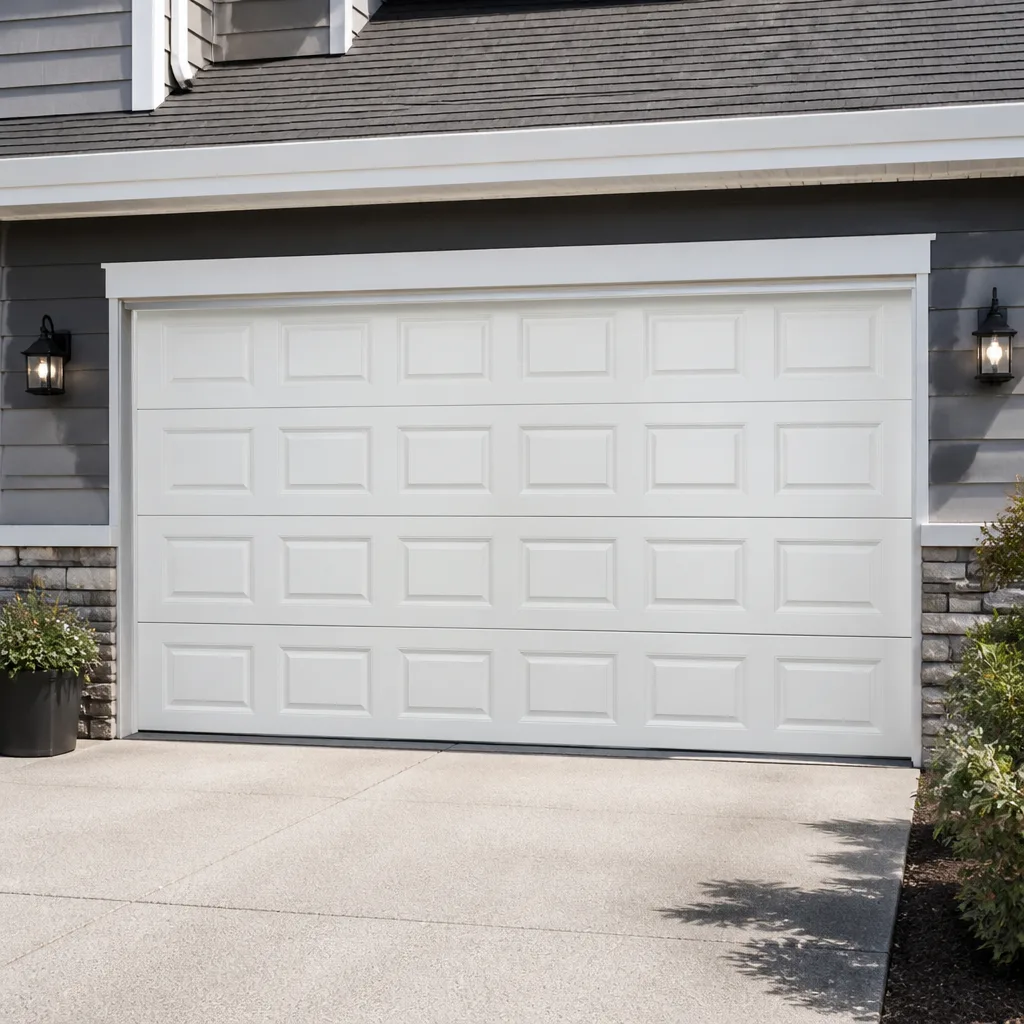 Raised-panel steel
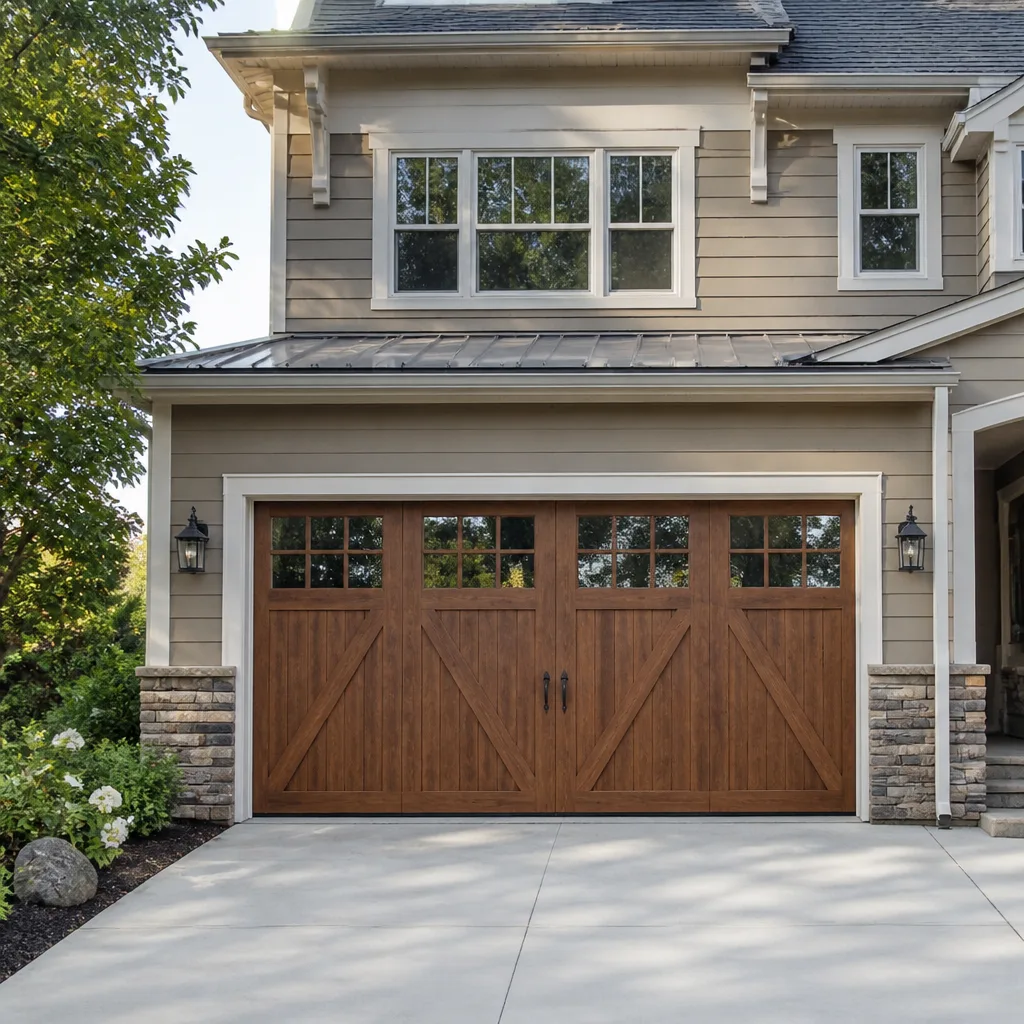 Carriage house
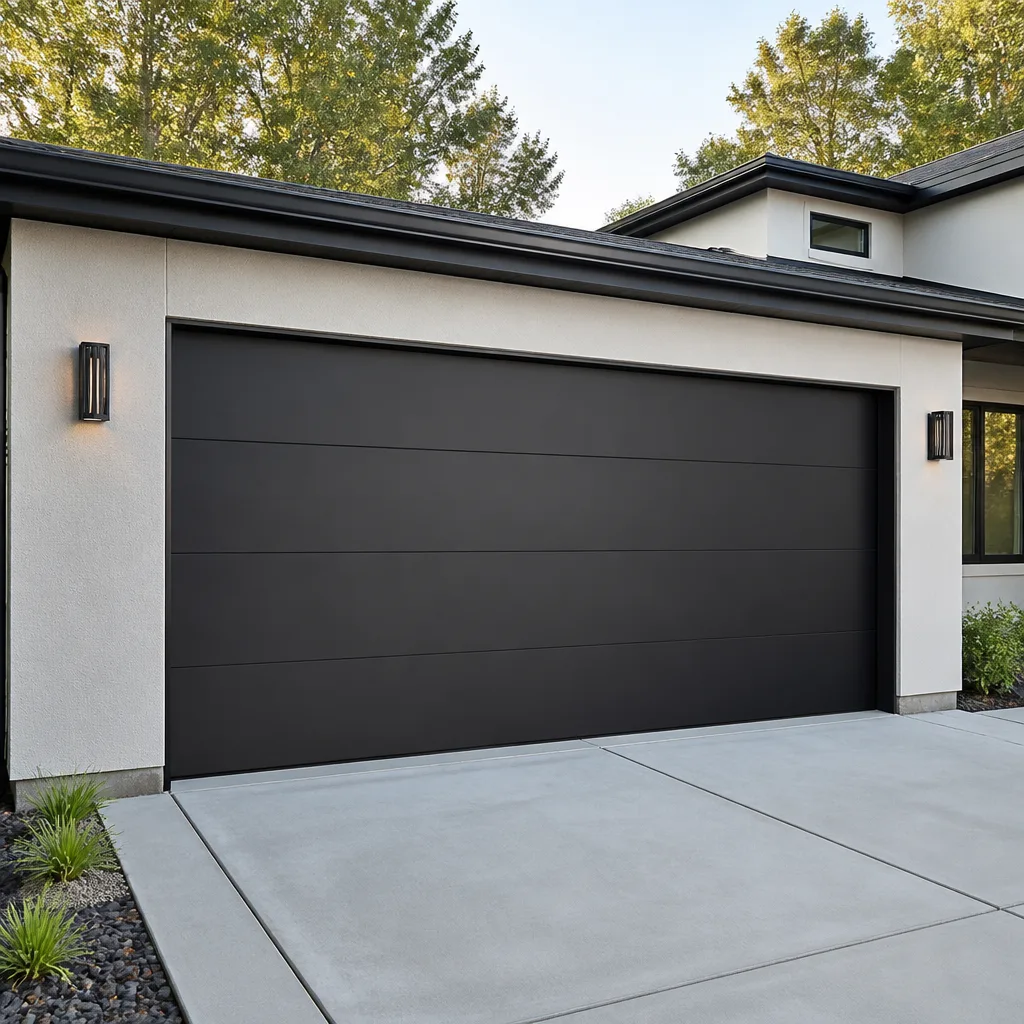 Modern flush
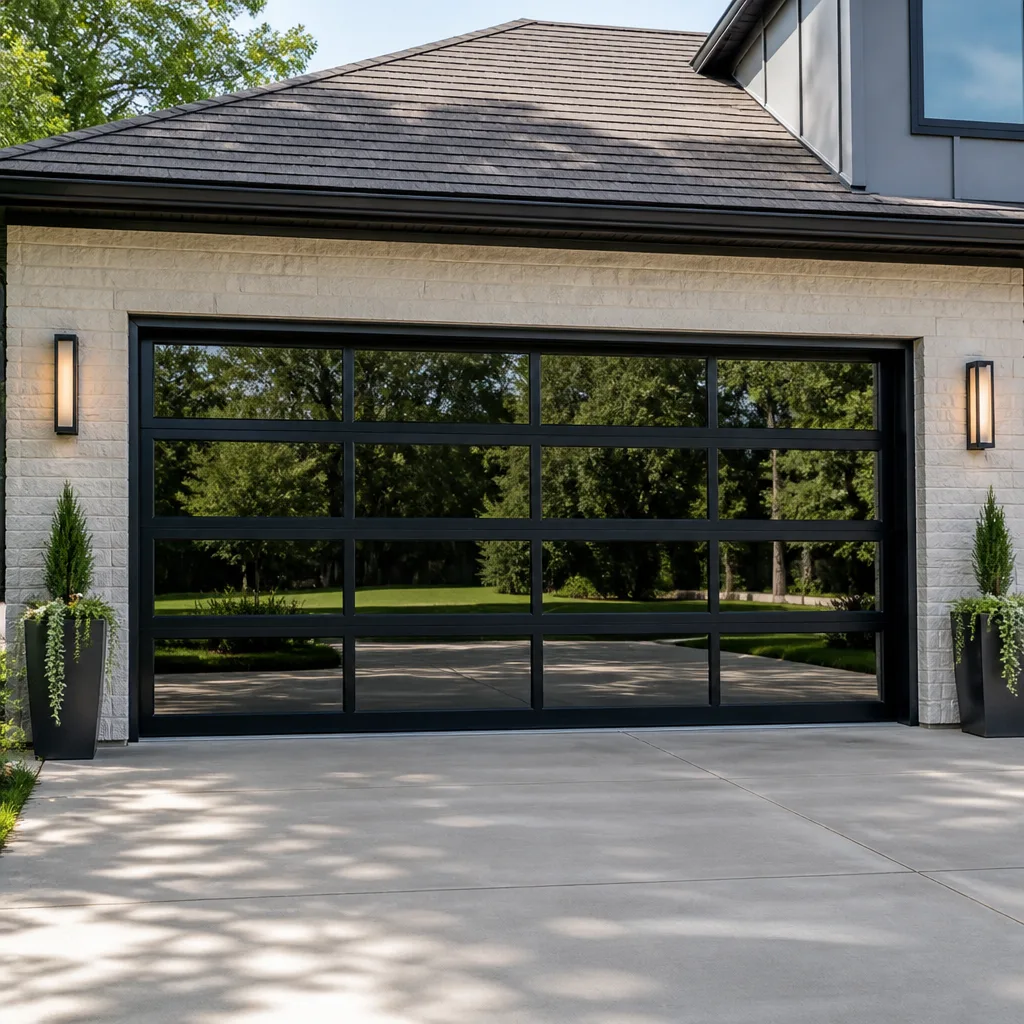 Full-view glass
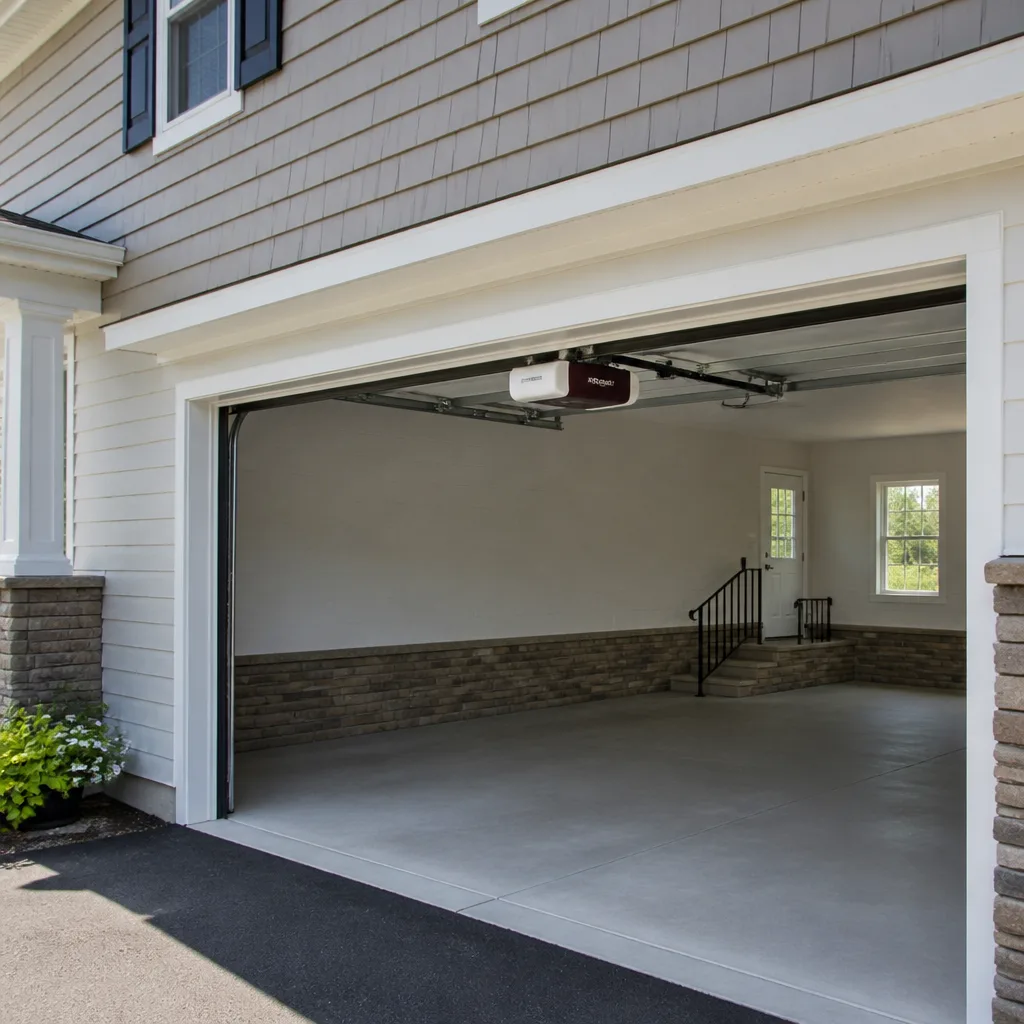 LiftMaster openers
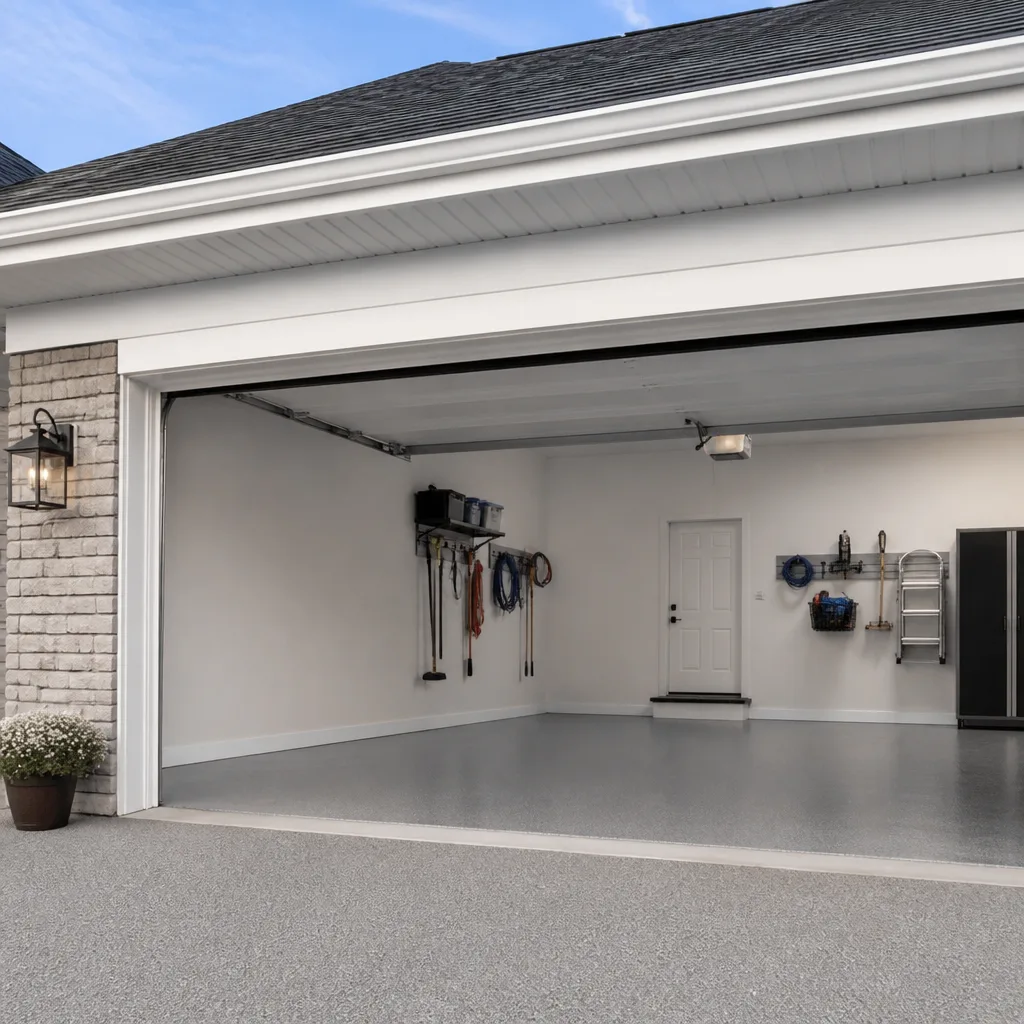 Chamberlain openers
Full 25-point door and opener safety check with every visit - springs, cables, rollers, tracks, and your LiftMaster or Chamberlain opener included
You get a price before we start. It does not change when the pro arrives.
Get your free estimateDIY vs Professional Garage Door: The Columbia Homeowner’s Decision Guide
Most garage door advice lumps every repair into one bucket and asks whether you’re “handy enough.” That’s the wrong question. Replacing a bottom seal and replacing a torsion spring are not the same kind of task, and treating them as equivalent repair decisions is exactly how people get hurt. A wound torsion spring holds a tremendous amount of stored energy, and releasing it the wrong way is unforgiving. In this guide we’ll draw a clear line between the jobs a Columbia homeowner can safely handle and the ones that belong with a trained technician, walk through the real cost math of going it alone, and explain how Maryland insurance and warranty rules treat self-performed work on an attached garage. Columbia homes deal with humid summers and cold snaps that work door hardware hard, so the stakes here are practical, not theoretical.
Quick Answer
Some garage door tasks are genuinely homeowner-appropriate: bottom seals, weatherstripping, sensor cleaning, and minor cosmetic fixes. Others – torsion springs, cables, bottom brackets, and any structural work at the header – carry serious injury risk and should go to a trained technician. If your door won’t open, has a snapped spring, or hangs unevenly, call a professional rather than attempting it yourself.
Styles & brands we work with
- Raised-panel steel
- Carriage house
- Modern flush
- Full-view glass
- LiftMaster openers
- Chamberlain openers
Table of Contents
- Why Stored Energy Changes the Whole Conversation
- Tasks That Are Genuinely DIY-Appropriate
- Tasks That Require a Trained Technician
- The Real Cost Calculation for DIY
- How Maryland Insurance Treats Self-Performed Repairs
- Risk Factors That Change the DIY Equation
- What a YouTube Video Prepares You For (and What It Doesn’t)
- What Makes Columbia Doors Different
Why Stored Energy Changes the Whole Conversation
A wound torsion spring stores a large amount of torque, and that energy has to go somewhere when the spring is released or fails. That single fact splits the DIY garage door question in two. On one side are low-energy tasks where a mistake means a crooked seal or a sensor that needs re-aligning. On the other are high-energy components where a mistake means a fast-moving metal part and a trip to the emergency room. The two should never be filed under the same heading.
We’ve watched homeowners approach a spring replacement the same way they’d approach a weatherstripping job, and that’s the misunderstanding worth correcting first. Springs, cables, and bottom brackets are under constant tension while the door is at rest. They don’t announce when they’re about to let go. A door that looks calm and closed can still be holding force in its cables and springs, which is why technicians treat every spring job as a controlled procedure, not a quick swap.
For Columbia homeowners, this matters more than the general advice suggests. The region’s humidity swings and temperature changes through the year flex metal components repeatedly, and older doors in established Columbia neighborhoods often carry springs that have been cycled thousands of times. When one finally fails, the stored energy releases all at once. That’s the moment to step back and call a specialist, not the moment to reach for a wrench.
Tasks That Are Genuinely DIY-Appropriate
Plenty of garage door maintenance is well within reach for a careful homeowner, and we’d rather you handle the easy stuff yourself than pay a service call for it. These tasks involve no stored spring energy and no risk of a sudden release:
- Bottom seal replacement. A worn bottom seal lets in drafts, water, and pests. Slipping a new one into the retainer is a straightforward job with basic tools.
- Weatherstripping around the frame. Sealing gaps along the sides and top cuts drafts and keeps rain out, and it’s a simple peel-and-press or nail-on fix.
- Safety sensor cleaning and alignment. If your door reverses for no obvious reason, wipe the sensor lenses and check that the two eyes line up. This solves a surprising share of “my door won’t close” calls.
- Minor cosmetic dent repair. Small dents in a steel panel can often be worked out or filled without touching the door’s mechanical system.
- Lubricating hinges, rollers, and tracks. A little garage-door lubricant on the moving parts quiets a squeaky door and reduces wear – just don’t grease the tracks themselves.
- Visual inspection. Look for frayed cables, worn rollers, or a door that sits crooked. Catching a problem early is the cheapest repair there is.
Even on these tasks, work with the door fully closed and the opener disconnected so nothing moves unexpectedly. If a “simple” job turns out to involve a cable or a bracket, stop and reassess.
Tasks That Require a Trained Technician
This is where the line gets firm. The following jobs involve stored energy or structural loads, and they’re the reason garage door spring repair is a specialty in its own right rather than a general handyman task:
- Torsion spring replacement. The spring above the door stores the force that counterbalances the door’s weight. Winding and unwinding it safely takes the right winding bars and real technique. Our technicians have up to 9 years of experience with exactly this kind of work, and it’s still a job we approach with full attention every time.
- Extension spring replacement. The springs that run along the sides of older doors carry the same risk of sudden release and need the same care.
- Cable replacement. Cables are under extreme tension and can snap with lethal force. Never touch a frayed or slack cable.
- Bottom bracket work. The bottom bracket anchors the cable and is under load. This is one of the most dangerous parts of the system to handle.
- Structural header and track work. If the framing above the door or the track alignment is compromised, that’s structural work that affects how the whole door hangs.
- Opener motor and control board repair. Diagnosing a failed opener requires testing the logic board, the capacitor, and the drive system together – more than a parts swap. When the opener itself is the problem, garage door opener repair is the call to make.
If your door is stuck, jammed, or hanging off its track, don’t force it. That’s a safety situation, and it’s exactly what Columbia Garage Door Repair Pros handles. A trained technician can make the door safe before diagnosing the fix.
The Real Cost Calculation for DIY
DIY looks cheaper on paper until you add up everything it actually takes. A homeowner buying a replacement spring pays retail without a trade account, often needs specialized winding bars and safety glasses they’ll use once, and takes on the risk that a misinstallation damages the door, the opener, or themselves. Professional pricing, by contrast, is quoted and agreed before any work starts, so the number you hear is the number you approve.
Here’s how the two paths typically compare for common jobs. These are estimated ranges, and a written estimate sets the final price:
- Torsion spring (one spring): professional repair typically runs in the low-to-mid hundreds of dollars, parts and labor included. A matched pair is usually replaced together, so a pair costs about twice a single-spring range.
- Opener repair or replacement: depends on whether it’s a logic board, a drive gear, or a full unit swap; a written quote covers the diagnosis and the parts together.
- Bottom seal or weatherstripping: a modest materials cost if you do it yourself, and a low service-call cost if you’d rather not.
- New door installation: measured and ordered, then scheduled – not a same-day job. A free measure and a written price come first.
The hidden cost of DIY is the callback. If a spring is wound wrong or a cable sits improperly, the door may work for a short while and then fail – and now you’re paying a professional anyway, on top of what you already spent. There’s also the question of warranty. Self-service on a relatively new door can void the manufacturer’s coverage, because the maker can’t tell whether a failure came from a defect or from the install. Buying a Craftsman or LiftMaster system and then self-installing the spring is a good way to lose the protection you paid for.
How Maryland Insurance Treats Self-Performed Repairs
Maryland homeowner policies generally treat a claim tied to a self-performed repair on a structural component of an attached garage differently from one backed by professional documentation – and it’s worth understanding why before you pick up a tool. Insurers look at whether the work was done to a professional standard and whether there’s a paper trail showing who did what. A receipt from a licensed, insured technician is easy to produce. A DIY spring job leaves no such record.
An attached garage shares walls and a roofline with the house, which is why structural work there falls under the same scrutiny as the rest of the home. If a self-installed spring fails and damages the door, the opener, or a vehicle below, the insurer may question whether the work met the standard the policy expects. We can work with your insurer to document professional repairs, which is one reason we recommend keeping written estimates and receipts for anything involving the door’s structural parts.
None of this is a reason to panic about tightening a hinge or replacing a seal. It’s a reason to think twice before tackling the high-energy components yourself. If you’re unsure whether your policy cares about a particular repair, a quick call to your agent settles it – and for the structural jobs, a documented professional repair is the cleanest answer.
Risk Factors That Change the DIY Equation
Not every door carries the same risk. A few specific factors decide whether a DIY attempt is even worth considering:
- Single-spring vs. double-spring systems. A one-spring door leaves no backup if that spring fails, and the door becomes very heavy very fast. Two-spring systems are common on wider doors and mean more stored energy to manage during a repair.
- Door age. Older doors in Columbia’s established neighborhoods often have springs near or past their cycle limit. A spring that’s already fatigued is closer to failing, which raises the stakes on any work around it.
- Opener type. A belt-drive LiftMaster or Chamberlain behaves differently from an older chain-drive unit or a Genie screw drive. Diagnosing an opener problem means knowing how that specific drive system is supposed to behave.
- Attached vs. detached garage. An attached garage is part of the home’s fire-rated assembly, so work near the header or the door itself needs to respect that. A detached garage is more forgiving on the fire-rating side but no less dangerous on the spring side.
- Door weight and material. A lightweight single-car door and a heavy insulated double-car door put very different loads on the springs and cables.
When two or more of these factors stack up – an older double-spring door on an attached garage, say – the case for a professional gets stronger, not weaker. A specialist arrives knowing the system, whether it’s a Raynor torsion setup or a Craftsman chain drive, rather than learning it on your time.
What a YouTube Video Prepares You For (and What It Doesn’t)
Instructional videos are genuinely useful for the easy tasks. A good clip will show you how to slide a new bottom seal into its retainer or how to realign a safety sensor, and that’s a real service to homeowners. The gap opens when the video moves from “here’s how it looks” to “here’s what to do when it goes wrong.”
What a video can’t give you is diagnostic competence. It can’t tell you whether that grinding sound is a worn roller or a failing bearing, whether a door that reverses is a sensor issue or a travel-limit setting, or whether a spring that looks intact is one cycle from letting go. Those judgments come from seeing the same symptoms across many doors and knowing which brand and model behaves which way.
There’s also the matter of feel. A technician knows how much resistance a properly wound spring should have and can tell by touch when something is off. That’s not something a screen can teach. Our technicians have up to 9 years of experience reading exactly those signals, and it’s the difference between a fix that holds and one that fails quietly a few weeks later. Watching a video is a fine way to learn the vocabulary. It’s not a substitute for the hands-on judgment that keeps a repair safe.
What Makes Columbia Doors Different
Columbia’s housing stock spans decades, and that range shows up in the garage. Doors from different eras use different spring systems, different track designs, and different opener technologies, and a fix that’s routine on one can be unfamiliar on another. The humid summers and cold snaps here work the metal and the seals hard, so maintenance matters, and a door that’s been neglected through a few seasons tends to fail all at once.
We also see the full spread of brands across Columbia homes – Clopay and Amarr steel doors, Wayne Dalton doors with their own hardware quirks, Raynor commercial-grade units on larger garages. Knowing a specific system by name changes the diagnosis. When the door won’t behave, the first question isn’t “what’s broken” but “what kind of door is this,” and the answer points straight to the likely cause. That’s the advantage of a single-trade specialist over a generalist who sees one garage door a month. For everything from a snapped spring to a brand-new door, garage door repair stays within one specialty.
Common Mistakes to Avoid
- Treating a spring like a seal. Filing spring replacement under “weekend project” is the single most dangerous mistake on this list. The risk profile is completely different, and the injury potential is real.
- Forcing a stuck door. Yanking on a door that’s off its track or jammed can bend panels, snap a cable, or bring the door down. Stop and call instead.
- Buying the wrong spring. Springs are matched to door weight and height, and guessing wrong leaves the door unbalanced or the spring overstressed. A specialist measures before ordering.
- Ignoring the warranty. Self-installing parts on a newer door can void the manufacturer’s coverage, and Columbia homeowners with a recently installed Craftsman or LiftMaster system should check before touching anything.
- Greasing the tracks. Lubricant belongs on hinges and rollers, not the tracks. Greasing the tracks attracts grit and makes the door drag.
- Skipping the documentation. For any structural repair, keep the written estimate and receipt. It matters for insurance and for resale.
- Assuming a video covers your model. Generic instructions don’t account for the differences between a Raynor torsion system and a Chamberlain chain drive. What works on one may be wrong on the other.
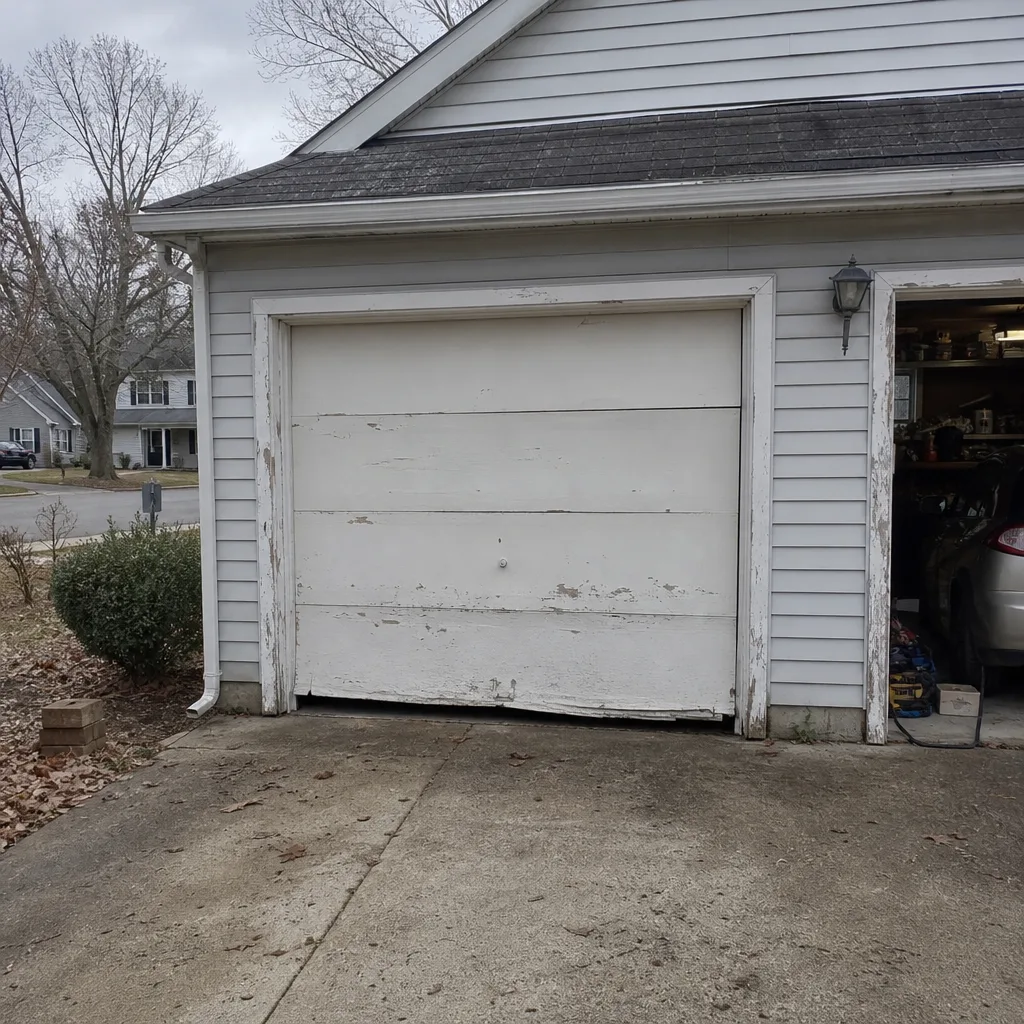
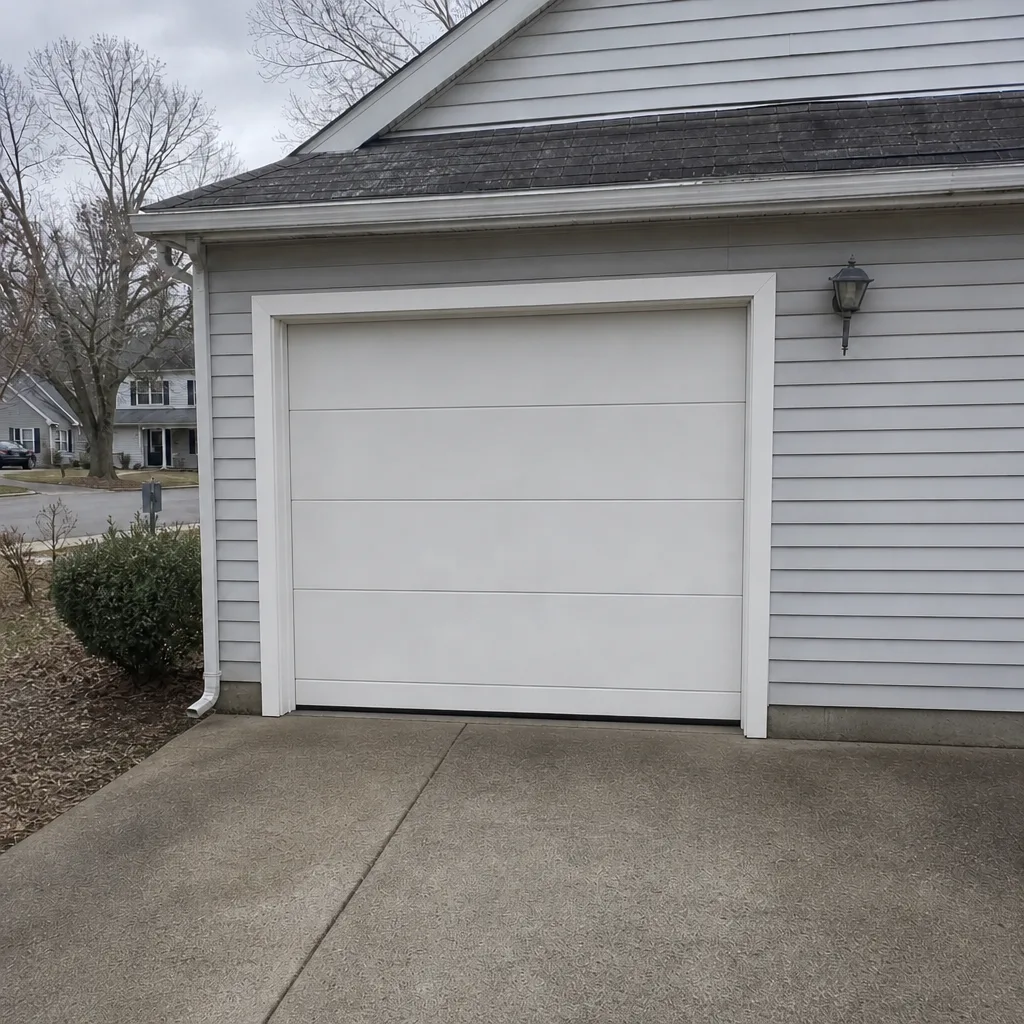
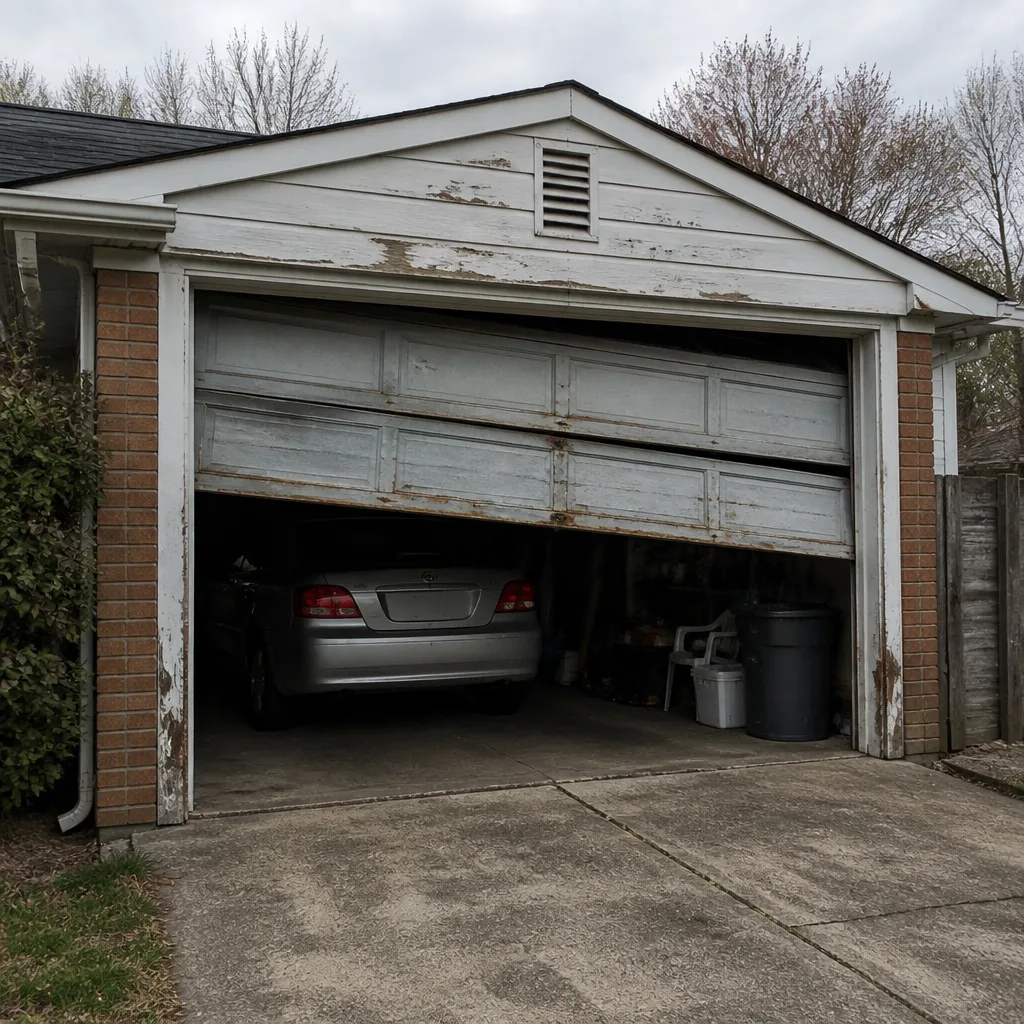
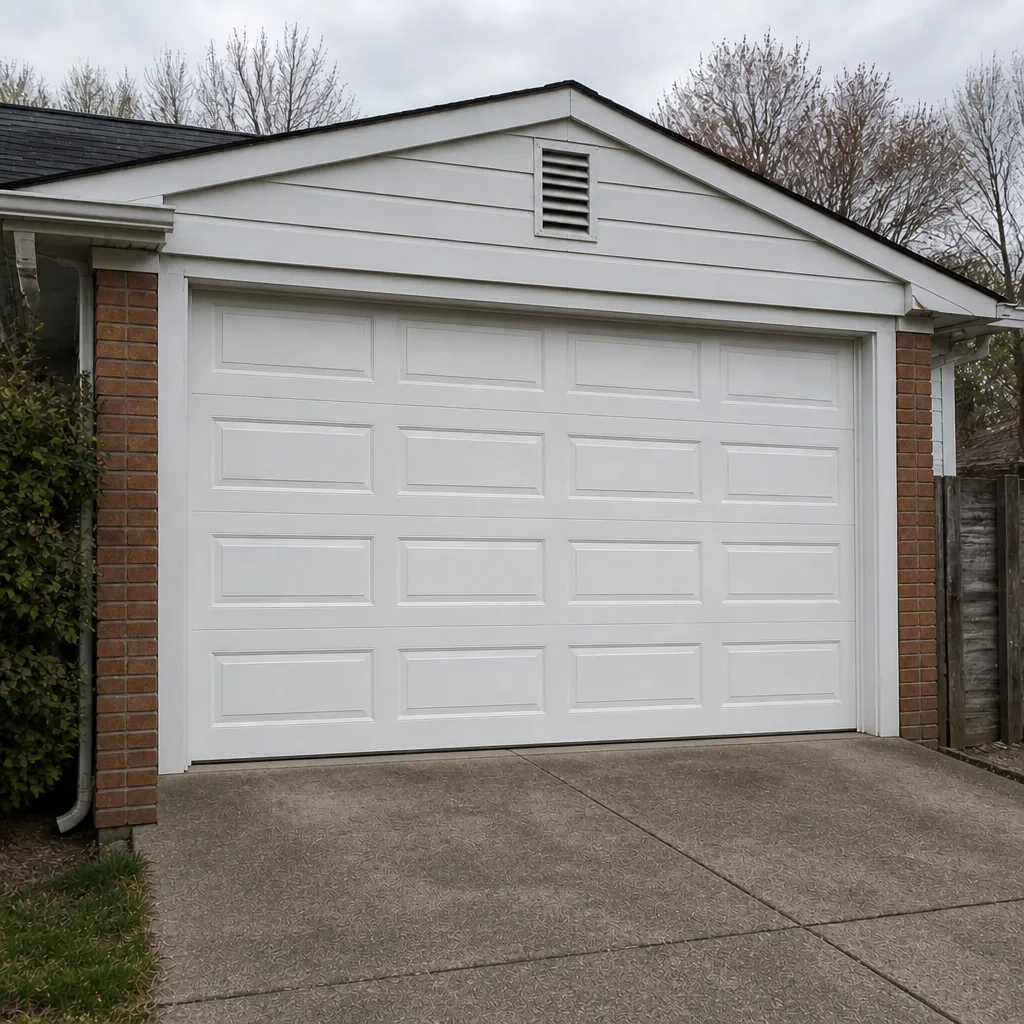
See the difference
 Before
 After
 Before
 After
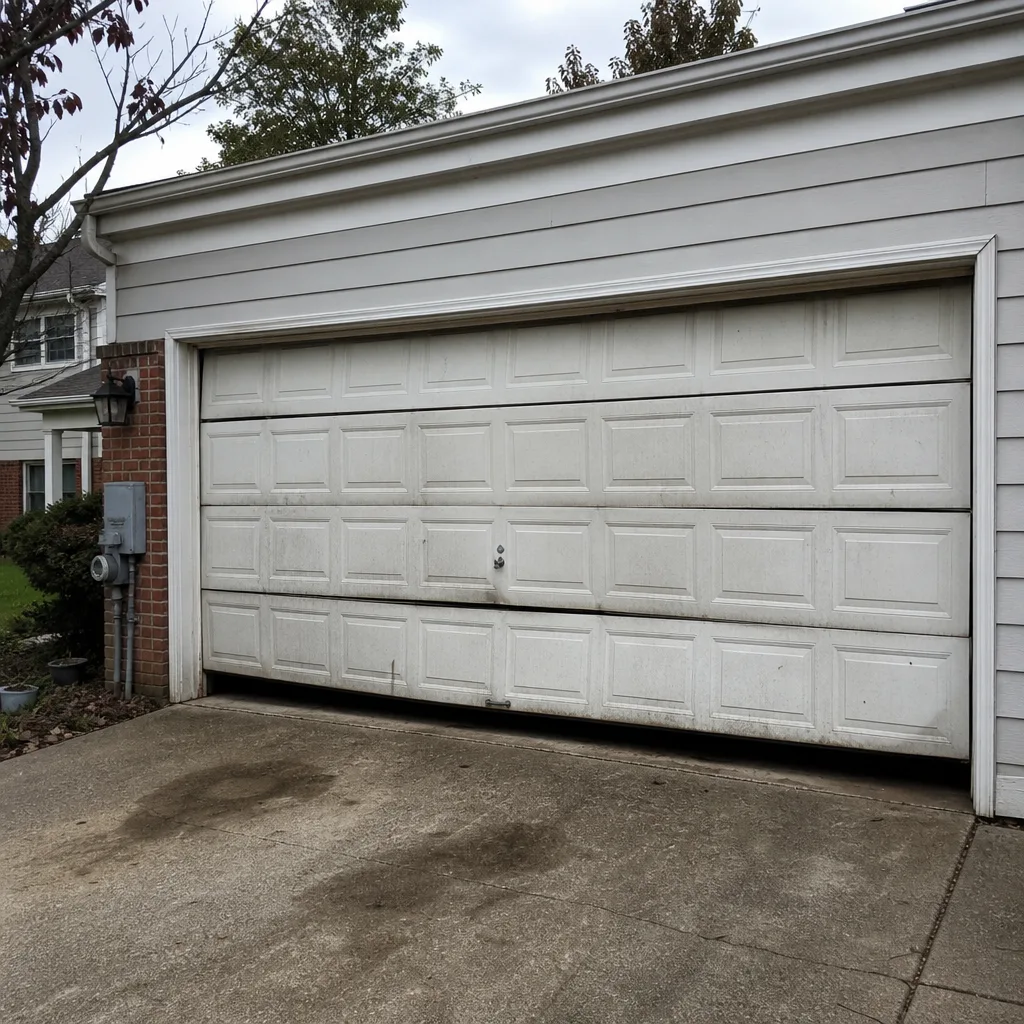 Before
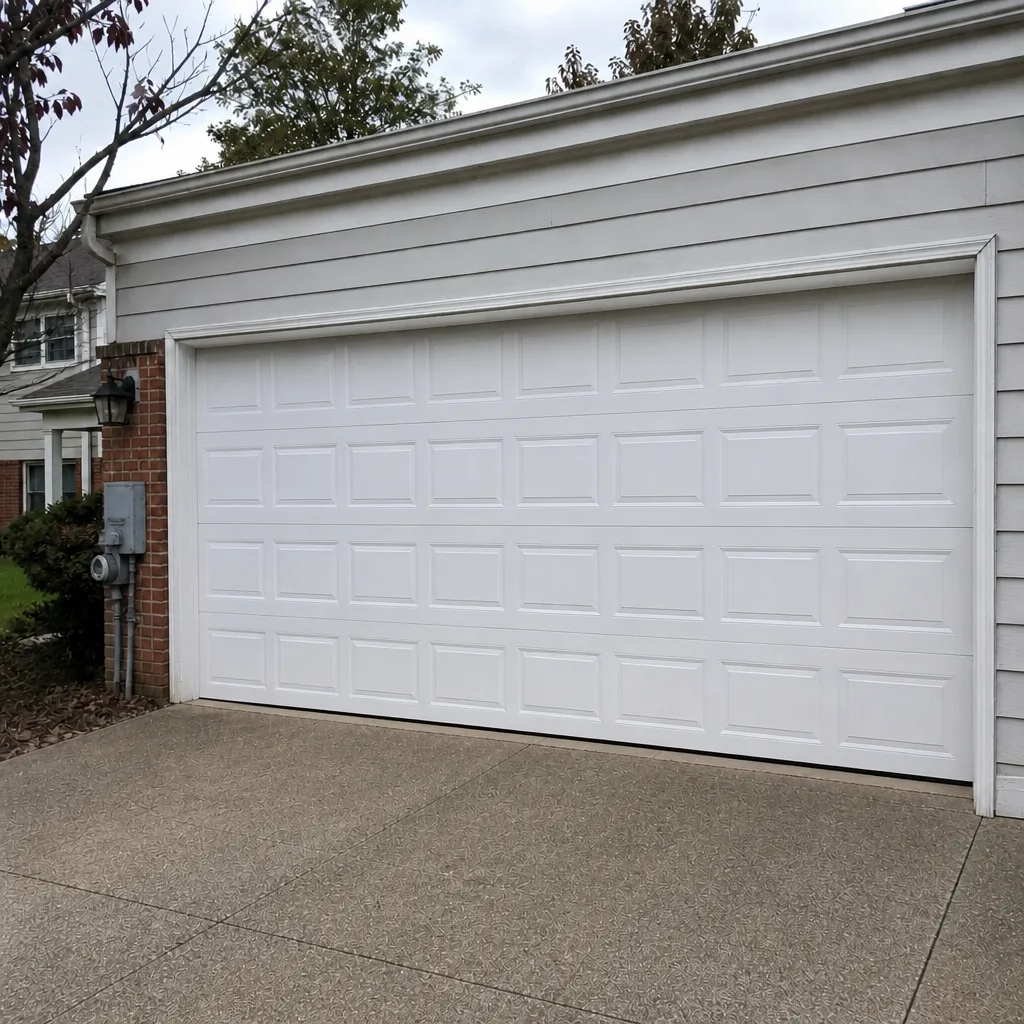 After
When to Call a Professional
Call a professional the moment the job involves stored energy or structural load: a snapped or sagging spring, a frayed or slack cable, a door hanging off its track, a bottom bracket under tension, or any work at the header. Call too if the door reverses unpredictably, the opener runs but the door doesn’t move, or a repair you attempted didn’t hold. These aren’t jobs to attempt twice. An emergency situation – a door stuck open overnight, a broken spring that leaves the door too heavy to lift – is exactly what our emergency service is for. Columbia Garage Door Repair Pros offers free estimates in Columbia – call (844) 913-3261, and a technician who works on garage doors every day will give you a straight answer and a price quoted before any work starts.
Frequently Asked Questions
You should not. Torsion and extension springs store enough energy to cause serious injury when they release, and winding them safely takes specialized tools and technique. This is the highest-risk repair in the trade, and it belongs with a trained technician. Call (844) 913-3261 for a free estimate – we’ll quote the job before any work begins.
Bottom seals, weatherstripping, sensor cleaning and alignment, minor cosmetic dent repair, and lubricating hinges and rollers are all reasonable DIY tasks. They involve no stored spring energy and no structural load. Anything involving springs, cables, brackets, or the header should go to a professional.
Torsion spring repair typically runs in the low-to-mid hundreds of dollars for one spring, parts and labor included, and a matched pair usually costs about twice that. These are estimates, and the written quote sets the final price. Call (844) 913-3261 for an exact quote – estimates are free.
It depends on the policy and the circumstances, but insurers generally look more closely at claims tied to self-performed work on an attached garage’s structural parts because there’s no professional documentation. A repair backed by a licensed, insured technician’s receipt is far easier to support. When in doubt, ask your agent before you start.
If the door is very heavy to lift by hand or won’t stay up, suspect the springs. If the opener runs but the door doesn’t move, or the door reverses for no reason, suspect the opener or a sensor. A technician can diagnose it in minutes, and knowing your brand – LiftMaster, Genie, Chamberlain, and so on – narrows it down fast. Call (844) 913-3261 to book a diagnostic.
Yes. We work with homeowners across Columbia and the surrounding communities, handling everything from spring repair to full door installation. Whether your door needs a minor fix or a replacement, we’ll give you a free estimate first. Call (844) 913-3261 to get started.
The Bottom Line
The DIY vs. professional question for garage doors comes down to stored energy. Bottom seals, weatherstripping, sensor cleaning, and light lubrication are yours to handle, and we’re glad to see homeowners keep up with them. Springs, cables, bottom brackets, and anything structural carry real injury risk, and no video closes the diagnostic gap that experience fills. Factor in the true cost of DIY – retail parts, one-time tools, callback risk, and warranty concerns – and the math favors a specialist for the high-energy jobs. Keep your receipts, respect the springs, and call in a technician when the job calls for one. If you’re in Columbia and unsure which side of the line your repair falls on, that’s a good time to ask.
Call Columbia Garage Door Repair Pros at (844) 913-3261 for a free estimate. Our technicians have up to 9 years of experience, we know your brand, and we’ll quote the price before any work starts.
Written by the team at Columbia Garage Door Repair Pros.