Last updated November 21, 2026
 Raised-panel steel
 Carriage house
 Modern flush
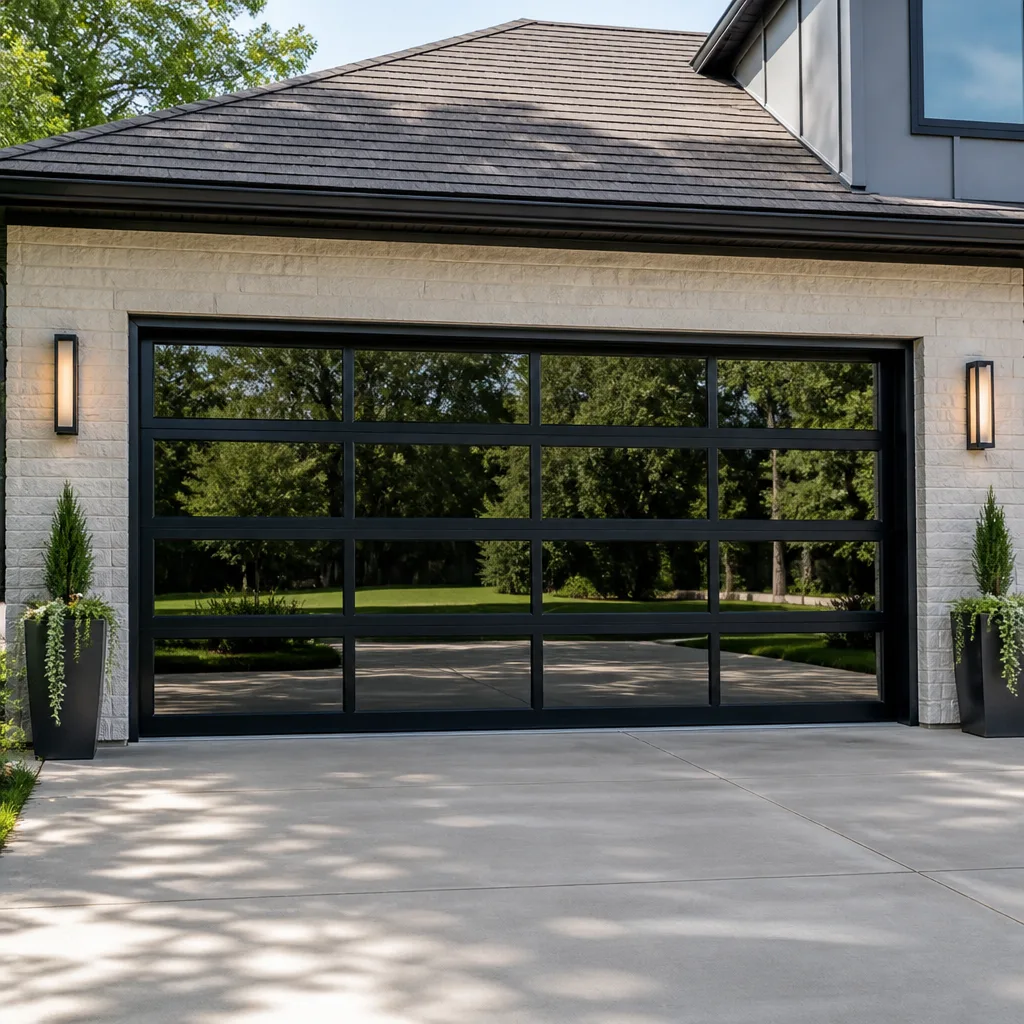 Full-view glass
 LiftMaster openers
 Chamberlain openers
Full 25-point door and opener safety check with every visit - springs, cables, rollers, tracks, and your LiftMaster or Chamberlain opener included
You get a price before we start. It does not change when the pro arrives.
Get your free estimateSeasonal Garage Door Care for Columbia: Year-Round Homeowner’s Guide
Most homeowners assume January is the month that breaks garage doors. In our experience around Columbia, it isn’t. The failures cluster in the temperature swing weeks of late October and early March, when a steel door and its springs move through 30-degree shifts in a single day. Steel contracts at night and expands by afternoon, and the hardware that holds it all together pays for that movement. Cold alone is hard on a door. Cold that keeps changing its mind is harder. What follows is a guide timed to temperature volatility rather than the calendar, covering what each season actually does to a garage door in the Columbia area and what you can check yourself. We’ll also be clear about the jobs that belong to a trained technician.
Quick Answer
Garage door care in Columbia works best when it’s scheduled around temperature swings rather than seasons: test the door’s balance in early spring and late fall, clean photo-eye lenses after spring pollen, lubricate moving parts before the first freeze, and watch the bottom seal through the humid summer. Spring and cable work is not a homeowner job, so any grinding, snapping or sudden imbalance calls for a professional.
Styles & brands we work with
- Raised-panel steel
- Carriage house
- Modern flush
- Full-view glass
- LiftMaster openers
- Chamberlain openers
Table of Contents
- Why Columbia’s Climate Is Hard on Garage Doors
- Spring (March-May): Freeze-Thaw Tracks, Pollen and Balance
- Summer (June-August): Humidity, Heat and Expansion
- Fall (September-November): The Lubrication Cycle Before Freeze
- Winter (December-February): Wet Cold and Frozen Hardware
- How Garage Orientation Changes Your Problem List
- A Year-Round Checklist You Can Actually Keep
- Common Mistakes to Avoid
Why Columbia’s Climate Is Hard on Garage Doors
Columbia sits in a mid-Atlantic climate band, which means a garage door here faces genuine stress in all four seasons rather than one long winter. That’s the part most care guides miss. A door in a colder, drier climate deals with sustained cold. A door in Columbia deals with repeated freeze-thaw cycles, humid summers that soften seals, and spring pollen that coats every horizontal surface, including the small plastic lenses on your safety sensors.
The mechanical reason comes down to materials moving at different rates. A steel door panel expands and contracts with temperature. The torsion spring above it, the cables, the hinges and the rollers all respond on their own schedule. When the whole assembly heats and cools together gradually, nothing complains. When it swings hard in a single day, fasteners loosen, cables stretch unevenly, and a spring that was already near the end of its cycle gives out.
Here’s what that looks like across a Columbia year:
- Late fall and early spring: the widest daily temperature swings, and the window when we see the most spring failures.
- April and May: heavy pollen across Howard County settles on sensor lenses and track surfaces.
- July and August: high humidity and hot garages stress bottom seals and opener motors.
- December through February: wet cold rather than dry cold, which changes how doors behave.
None of this means a Columbia door is doomed. It means the maintenance rhythm should follow the weather, not a generic “check your door in spring” reminder. If your door is already making noise or moving unevenly, it’s worth reading up on garage door repair before small issues become expensive ones.
Spring (March-May): Freeze-Thaw Tracks, Pollen and Balance
Spring in Columbia is a transition period, and transition is what stresses hardware. Overnight freezes soften by mid-morning, and any moisture that worked its way into track joints or around fasteners expands as it freezes and leaves gaps when it thaws. Over a few weeks, that freeze-thaw action can nudge a track slightly out of alignment or loosen a bracket that was tight in February.
Three jobs matter most in this window:
- Inspect and clear the tracks. Look for grit, small debris and any spot where the track has pulled away from the door frame. A track that’s out of line makes the door drag, and drag wears out the opener.
- Test the door’s balance. Disconnect the opener using the release cord, lift the door halfway by hand, and let go. A balanced door stays put. A door that drifts down or shoots up is telling you the springs and cables are no longer carrying the weight evenly, often after winter cable stretch.
- Clean the photo-eye lenses. The two small lenses near the floor are what stop the door from closing on a person or pet. Pollen coats them within days during an active spring, and a dirty lens reads as an obstruction. Wipe them with a soft dry cloth and confirm the door responds when you break the beam.
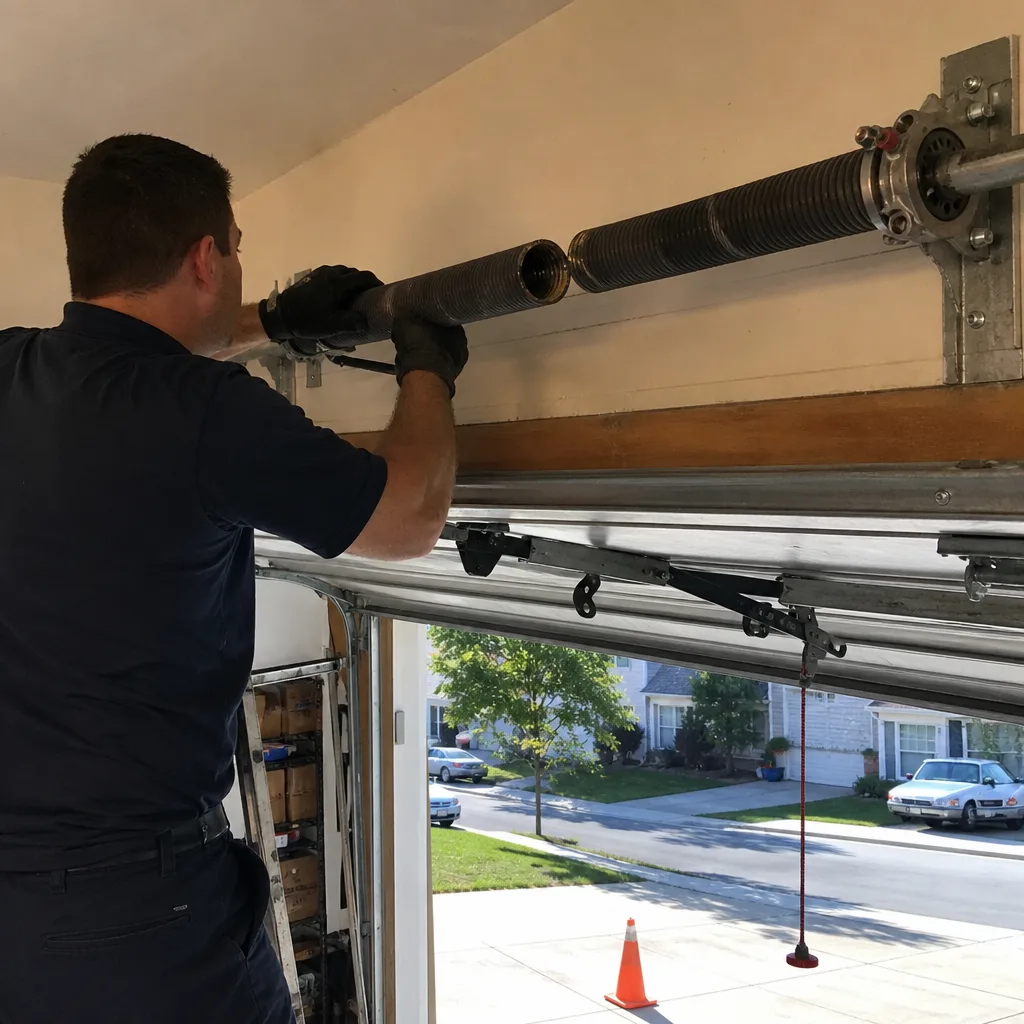
That balance test is also a safety checkpoint. If the door won’t hold position, stop using the opener and have the springs and cables checked. Torsion springs are under extreme tension, and the hardware that holds them can cause serious injury if handled without the right tools and training. This is one of the jobs we never suggest a homeowner attempt. Our garage door spring repair service exists for exactly this reason, and it’s a repair many general handyman services decline.
Spring is also the right time to look at the door’s paint or finish. Winter grit and spring rain combine to dull a steel door faster than most homeowners expect. A light clean and a spot touch-up on any chipped paint keeps rust from getting a foothold before summer humidity arrives.
Summer (June-August): Humidity, Heat and Expansion
Summer is the season homeowners underestimate. A garage in Columbia in July can run well above outdoor temperatures, especially on a door that faces the afternoon sun. Two things happen in that heat: the door’s materials expand, and the opener motor works harder to move a heavier-feeling door.
The most overlooked casualty is the bottom seal. That rubber strip along the floor is what keeps rain, insects and hot air out of the garage, and humid summer air accelerates its breakdown. Watch for these signs:
- The seal looks flattened, cracked or crumbly along its length.
- Daylight shows under the closed door.
- Water finds its way in during a heavy summer storm.
A worn bottom seal is a cheap fix compared to the damage moisture does to whatever’s stored in the garage, and replacing it is well within reach of most homeowners with basic tools.
Heat also affects the opener. If your opener housing sits in direct sun or in a garage that traps heat, the motor can overheat and shut down mid-cycle, then work again once it cools. Check that nothing is stacked against the opener unit and that its vents aren’t blocked. LiftMaster and Chamberlain openers both include thermal protection that will pause the motor rather than let it burn out, so a door that stops and restarts on hot afternoons is often telling you the unit is running hot, not failing outright.
Finally, watch the door panels for thermal expansion. On a south-facing steel door, panels can bow slightly or bind at the hinges as they expand. If the door starts to scrape or hesitate at a particular point in its travel, that’s usually a hardware adjustment rather than a replacement. Our garage door opener repair service handles the motor and control side of that equation, and the door hardware side gets checked at the same time.
Fall (September-November): The Lubrication Cycle Before Freeze
Fall is the single most valuable maintenance window of the year in Columbia, because it’s your last easy chance to prepare the door before the temperature starts swinging. A full lubrication cycle now prevents a lot of winter complaints.
Here’s the sequence that works:
- Lubricate the moving parts. Apply a garage-door-specific lubricant to the hinges, rollers, and the torsion spring coils (a light coat only). Skip the tracks themselves. Tracks should be clean and dry, not greasy, because grease traps grit and turns into a grinding paste.
- Inspect the weatherstripping. Check the seal around the door frame and along the sides. Cracked or shrinking weatherstripping lets cold air and moisture in, and fall is the time to replace it before the wet cold arrives.
- Test the opener’s safety reverse. Place a solid object like a brick in the door’s path and confirm the door reverses on contact. Then test the photo-eye beam again after a summer of use.
- Have the opener’s limit and force settings checked. These settings tell the opener how far to travel and how hard to push. Cold weather changes how much resistance the door offers, and an opener set up for summer can strain or reverse incorrectly in the cold. This adjustment is best done by a technician who can test it safely.
Fall is also when we get the most balance-check calls, and it’s the same reason spring is busy: the temperature swing weeks of late October compress a lot of expansion and contraction into a short window. If you noticed a noise in March, you’ll likely notice it again now. Catching it in October is cheaper than catching it in January. If you want the door looked over before winter, a free estimate through Columbia Garage Door Repair Pros is an easy place to start.
Winter (December-February): Wet Cold and Frozen Hardware
Columbia’s winter isn’t the driest cold you’ll find. It’s a wet cold, with freeze-thaw cycles and occasional ice rather than weeks of steady deep freeze. That distinction matters for a garage door.
In dry cold, the main risk is a spring getting brittle and failing under load. In wet cold, moisture gets into places it shouldn’t: track joints, hinges, lock cylinders, the bottom seal. That moisture freezes and expands, and when it thaws it can leave the door slightly misaligned or a lock cylinder that won’t turn.
Signs the wet cold is getting to your door:
- The key won’t turn in the lock cylinder. Don’t force it with pliers. A graphite-based lock lubricant usually frees it without damage.
- The door hesitates at the start of its travel, then moves normally. Ice or frost in the track is a common cause.
- The bottom seal sticks to the floor and pulls away when the door lifts.
- The door is louder than it was in October.
Here’s the practical question: when do you call, and when do you wait? If the door still opens and closes fully and the noise is mild, a lubricant touch-up and a clean of the tracks is usually enough. If the door stops partway, reverses repeatedly, hangs at an angle, or makes a sharp bang, that’s a call. A snapped spring shows up as a door that feels extremely heavy by hand and won’t stay up. That’s a safety issue, not a wait-and-see.
Winter is also when an out-of-service door becomes a real problem. A door that won’t close leaves the garage open to weather and to anyone walking by. We treat emergency garage door service as a core part of what we do, not an upsell, because a stuck or broken door in January is a security matter as much as a convenience one.
How Garage Orientation Changes Your Problem List
Two doors on the same street in Columbia can develop completely different problems depending on which way the garage faces. Orientation affects sun exposure, moisture, and how fast the door heats and cools.
- South-facing garages get the most afternoon sun, so steel panels expand hardest in summer. You’ll see more thermal binding, louder hinges in July, and faster paint fade. These doors benefit most from an early-summer lubrication check.
- North-facing garages stay cooler and more shaded, so they dry out more slowly. Expect more moisture-related issues: sticky locks, corroded hinges and faster bottom-seal wear in winter.
- East-facing garages catch morning sun, which means a fast warm-up after a cold night. That quick thaw is exactly the pattern that stresses springs, so these doors often fail in the temperature swing weeks.
- West-facing garages take the hottest part of the day and hold it. Opener motors in these garages run hotter, so heat ventilation matters more than anything else in July and August.
An attached garage also behaves differently from a detached one. Attached garages share walls with the house, so the garage stays warmer in winter and cooler in summer, which keeps the door’s temperature more stable. Detached garages swing wider in both directions, and those swings are what breaks worn hardware. If your detached garage is unheated, treat every seasonal check as slightly more urgent than the same check on an attached garage.
A Year-Round Checklist You Can Actually Keep
Most homeowners abandon a long maintenance checklist by February. This one is short enough to actually finish. Run these checks four times a year, timed to the start of each season.
- Test the balance. Release the opener, lift the door halfway by hand, and see if it holds. If it drifts, stop and schedule a service call.
- Test the safety reverse and photo eyes. Both should stop and reverse the door. Clean the lenses first.
- Look at the tracks. Run a hand along each track for dents, grit or loose brackets.
- Lubricate moving metal. Hinges, rollers and springs, with a door-specific lubricant. Not the tracks.
- Inspect the bottom seal and weatherstripping. Check for cracks, gaps and daylight through the closed door.
- Check the springs and cables at a glance. Look for a visible gap in a torsion spring or a cable that’s frayed or hanging slack, then stop and call. Don’t touch them.
- Listen for changes. A door that sounds different this month than last month is telling you something.
That’s it. Seven checks, four times a year. Most of them take minutes, and they catch the problems that would otherwise show up as a call at the worst possible time. If a check turns up something you’d rather not handle, a trained technician with the right tools can take it from there. Our technicians have up to 9 years of experience, and they work on LiftMaster, Chamberlain, Clopay and the other brands that make up most Columbia doors, so they arrive familiar with the system rather than learning it on the spot.
Common Mistakes to Avoid
- Greasing the tracks. Grease on a track attracts grit and creates a grinding paste that wears rollers faster. Tracks stay clean and dry; lubricant goes on hinges, rollers and springs.
- Treating the balance test as optional. A door that won’t hold halfway open is carrying an uneven load, and that’s the condition that snaps springs. Test it every season, not once a year.
- Ignoring the bottom seal until it leaks. Summer humidity and winter freeze-thaw break down a seal faster than most homeowners expect. Check it in May and again in October.
- Forcing a frozen lock cylinder. Pliers and leverage are how a lock cylinder gets destroyed. A graphite lubricant and a little patience usually solve it.
- Adjusting spring tension yourself. This is the most dangerous repair on the door. Leave torsion spring work to a trained technician, every time.
- Assuming the opener is the problem. When a door gets hard to move, the opener is often just straining against a door that needs a hardware adjustment. Diagnose the door before replacing the opener.
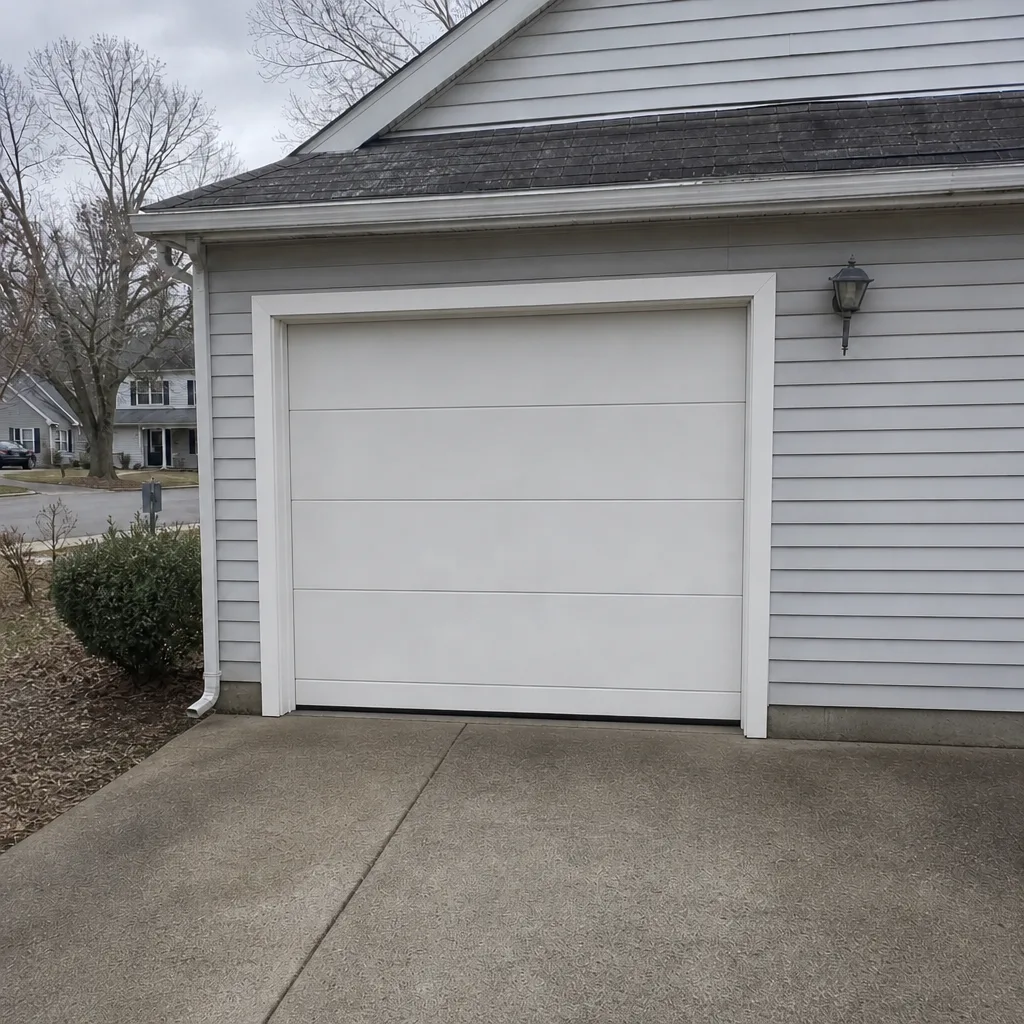
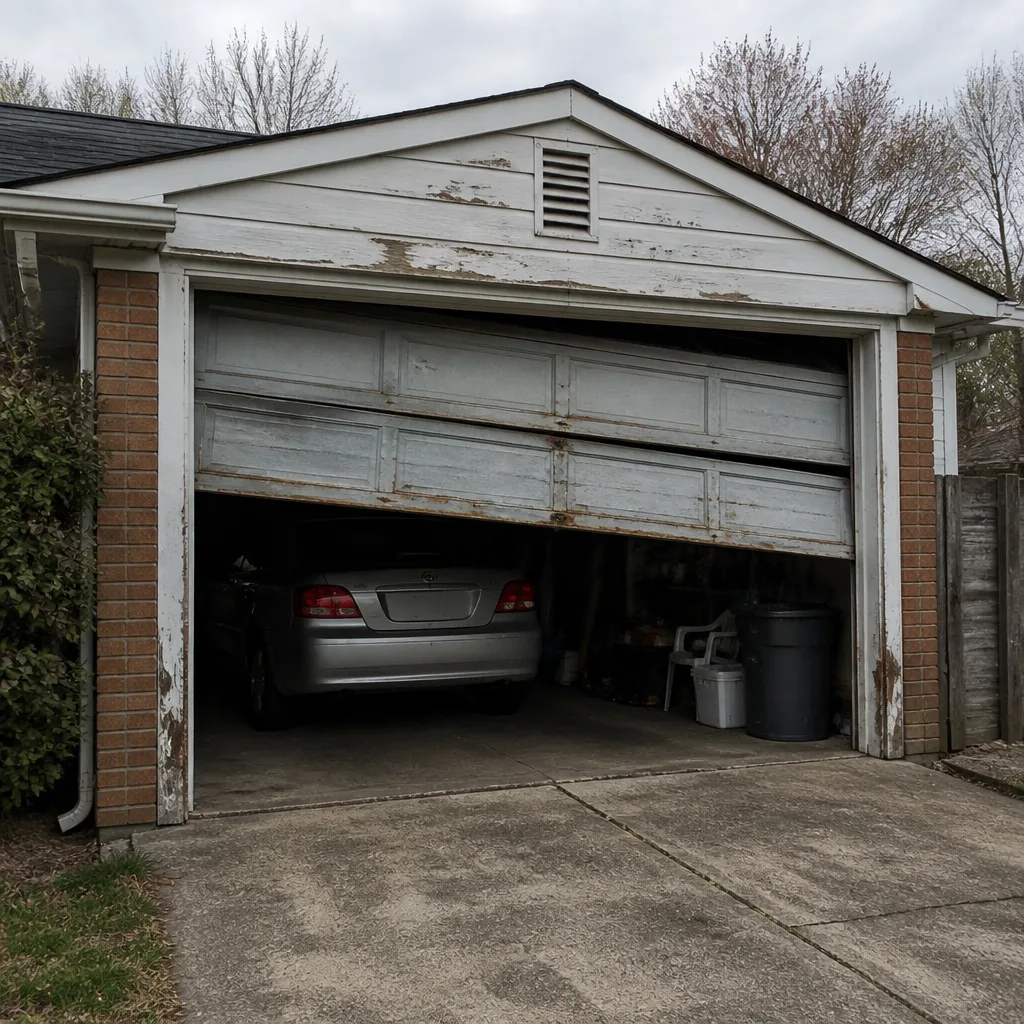
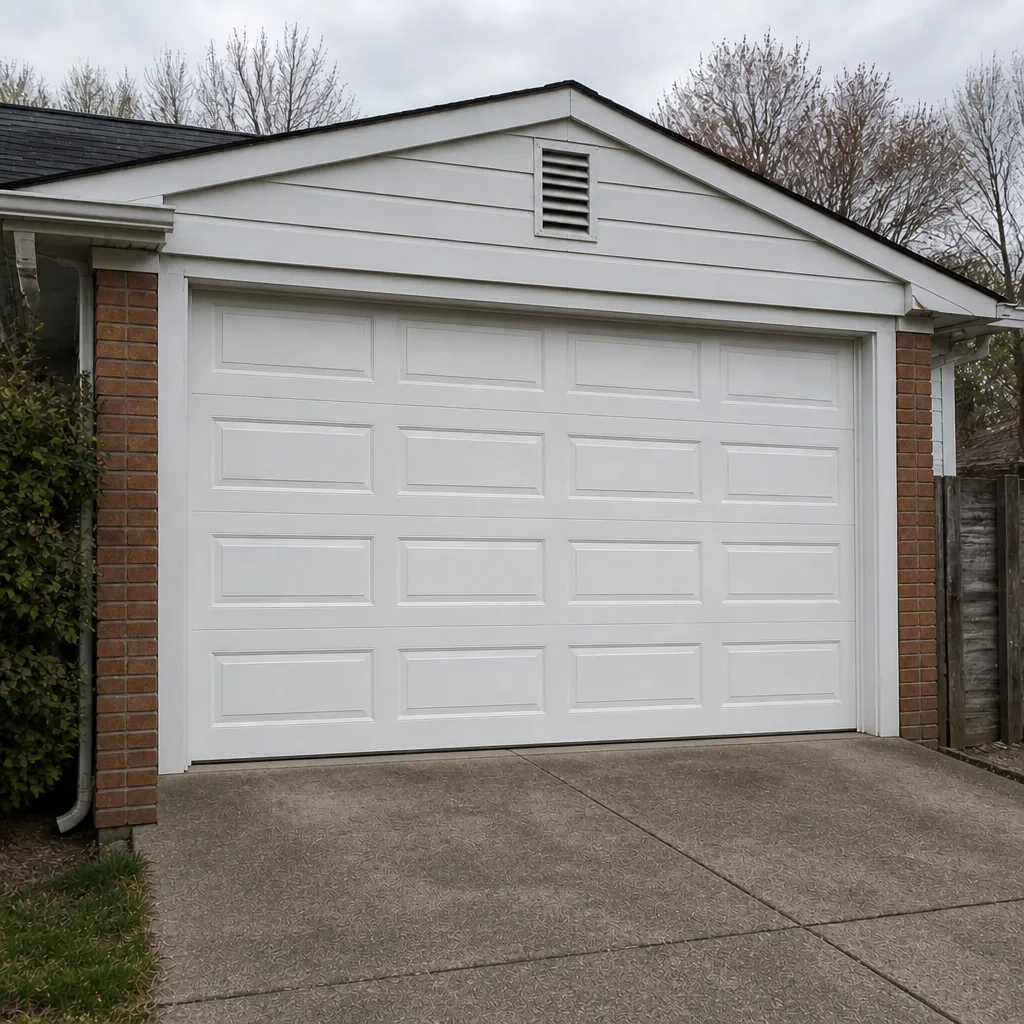
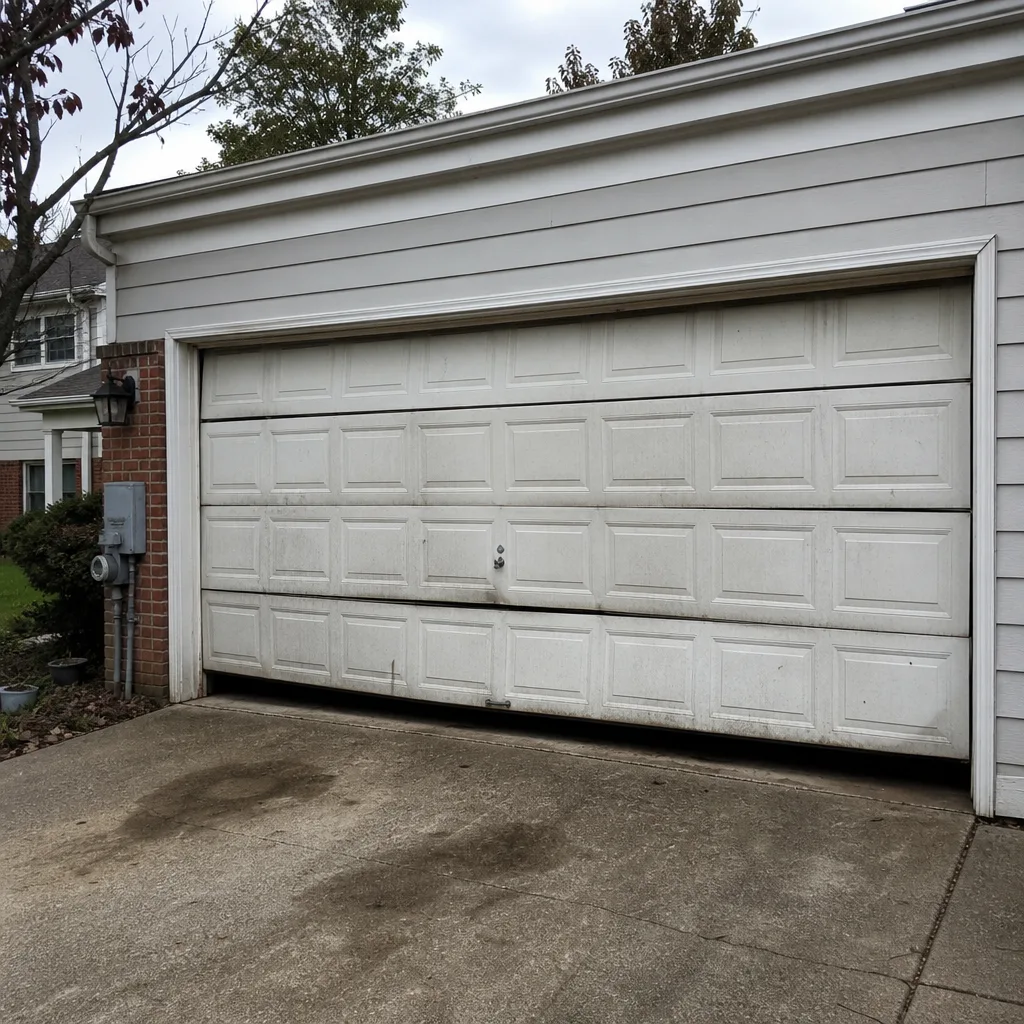
See the difference
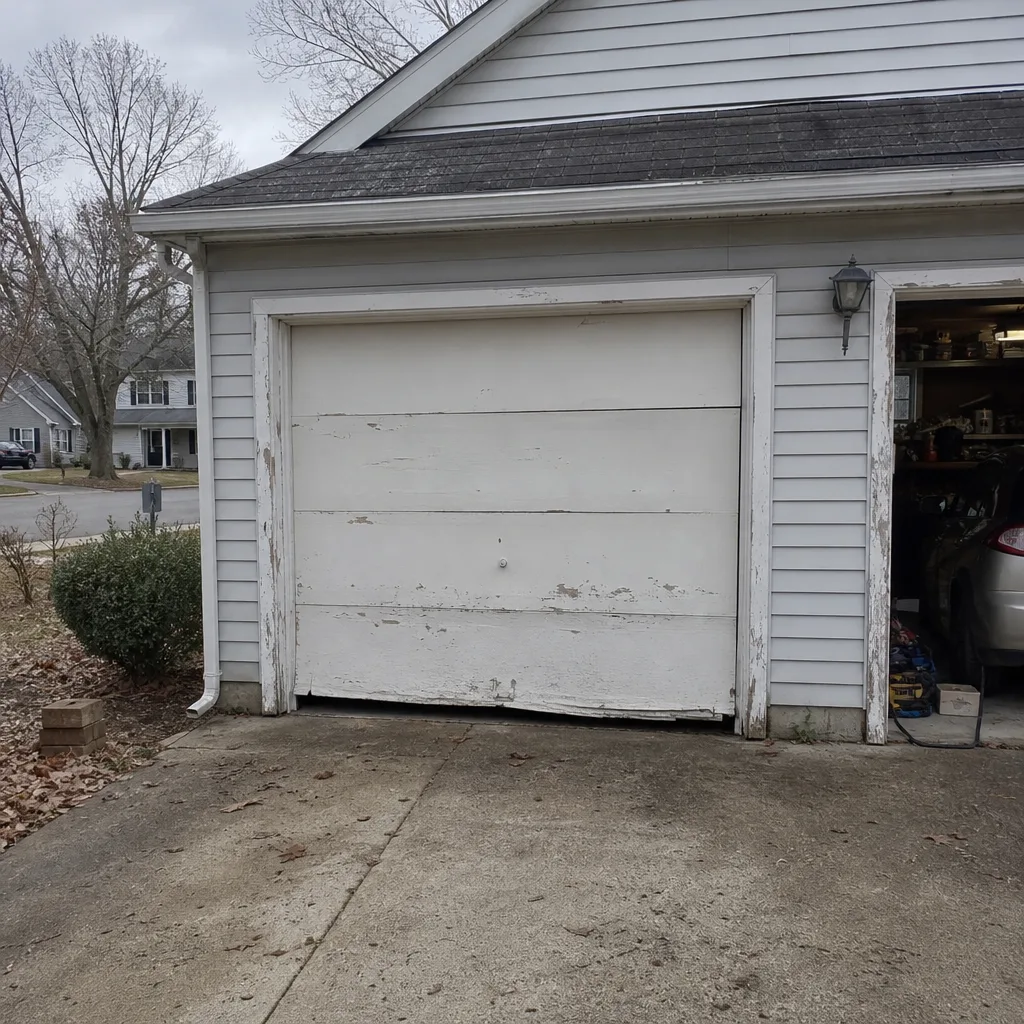 Before
 After
 Before
 After
 Before
 After
When to Call a Professional
Some things you should check yourself, and some things you shouldn’t. Call a professional when the door won’t hold position on the balance test, when you see a gap in a torsion spring or a frayed cable, when the door hangs at an angle or reverses for no reason, when the opener runs but the door doesn’t move or moves inconsistently, or when the door makes a sharp bang or a grinding noise it didn’t make last month. Any of those is a sign the door’s load is no longer balanced, and continuing to run the opener on an unbalanced door turns a small repair into a bigger one. Emergency situations where a door won’t close or move at all are exactly what our emergency service exists for. Columbia Garage Door Repair Pros offers free estimates in Columbia, and the price is quoted and agreed before any work starts. Call (844) 913-3261.
Frequently Asked Questions
Look for a specialist that works only on garage doors, not a general handyman, and ask whether they service the brand of door or opener you already have. A specialist will test the door’s balance, check springs and cables, adjust the opener’s limits and force, and inspect seals in a single visit. Columbia Garage Door Repair Pros works on LiftMaster, Chamberlain, Genie, Clopay and the other major brands. Call (844) 913-3261 for a free estimate.
Late fall and early spring are the hardest stretches, because that’s when daily temperature swings are widest and the door’s steel and springs expand and contract fastest. Winter and summer bring their own problems, humidity and heat in summer and wet cold in winter, but the swing weeks are when we see the most failures. Schedule a check just before and just after that window.
Fall, ideally before the first hard freeze, is the best single window for a full maintenance visit. That’s when lubrication, weatherstripping and the opener’s limit and force settings can all be adjusted before the temperature drops. If you can only fit one check a year, make it the fall visit, then run the balance test yourself in early March. Call (844) 913-3261 for a free estimate.
Yes. Lubricating hinges, rollers and the torsion spring coils with a door-specific lubricant is a safe homeowner task, and so is cleaning the tracks. What you should never do yourself is adjust or replace a torsion spring or a cable. Those are under extreme tension and can cause serious injury. Leave that to a trained technician.
In Columbia’s wet-cold winters, cold weather causes opener strain, not usually opener failure. Moisture freezes in track joints, seals stiffen, grease thickens and the door offers more resistance, so the opener strains to lift it. An opener whose force and limit settings were adjusted in warm weather may reverse or stop short. If your door stops partway or reverses in the cold, have the door and opener checked together. Call (844) 913-3261 for a free estimate.
Springs fail because of cycles, not just cold. Every time the door opens and closes, the spring flexes, and temperature swings add extra movement to the same spring coils and cables. In Columbia’s swing weeks, that added motion comes fast and repeatedly, and a spring that was already near the end of its life finally breaks. A spring that’s been noisy or your door’s felt heavier for a while is due for a check before the next swing.
Spring repair costs vary by door type, spring type and whether one or both springs are replaced, and we won’t quote a number we haven’t inspected for. What we can promise is that you’ll get a written estimate before any work starts, so the invoice matches the quote. Call (844) 913-3261 for a free estimate.
The Bottom Line
Garage door care in Columbia should follow temperature volatility, not the calendar. That means checking balance and cleaning sensors in the swing weeks of early spring and late fall, chasing humidity and heat in summer, running a full lubrication cycle before the first freeze, and watching for wet-cold problems in winter. Orientation matters too: south-facing doors fight heat, north-facing doors fight moisture, and detached garages swing harder than attached ones in every season. Do the seven checks yourself, four times a year, and let a specialist handle springs and cables. If something on your door has changed, get it looked at before the next swing. Call (844) 913-3261 for a free estimate, and get your door back on track before the next hard temperature change.
Written by the team at Columbia Garage Door Repair Pros.